Hello , I am Toritseju Samson Moju

Product Engineer (Design-First Full Stack)

Bridging UX and Production Code

I work across product engineering roles, including Product Engineer, Design Engineer, and Software Engineer on product-focused teams.

About Me

I’m a Product Engineer with a design-first mindset and over a decade of experience building production-ready digital systems. My background in visual design and UX gives me a unique advantage: I don’t just write code — I shape how products feel, function, and scale.

I’ve worked across SaaS, EdTech, AI, FinTech, and enterprise systems, often building admin dashboards, internal tools, CMS platforms, and data workflows. I enjoy translating complex requirements into clear, scalable solutions.

What sets me apart is my ability to think like a designer and execute like an engineer. I care about clarity, usability, and maintainability — especially in systems used by non-technical teams.

I’m currently open to Product Engineer, Design Engineer, and product-focused Full-Stack roles, including global and visa-sponsored opportunities.


Skills & Capabilities

A blend of engineering depth and design-first thinking

Frontend

React, HTML, CSS, JavaScript

Product

UX, Design Systems, Admin Dashboards

Backend

PHP, MySQL, REST APIs, Laravel, Node.js

Platforms

SaaS, EdTech, AI, FinTech, B2B

CASE STUDIES

Edutee Global — End-to-End EdTech Platform

Product Engineer / Technical Lead - View Project

Overview

Edutee Global required a scalable digital platform to manage educational content, users, and internal operations. Existing workflows were manual, fragmented, and difficult for non-technical staff to manage independently. The goal was to design and build a production-ready platform that could support content delivery, user management, and internal administration — while remaining flexible for future growth.

My Role

I owned the product end-to-end, covering UX and product design, frontend engineering, backend development, data modelling, admin systems, RBAC, deployment, and ongoing improvements. This role required bridging product intent and production code to deliver a usable, maintainable system.

Solution & System Thinking

The solution focused on clarity, control, and scalability: a custom CMS, admin dashboards, RBAC, clear workflows, and responsive UI. Design decisions were validated early using Figma, then translated into production-ready components.

Key Screens & Features

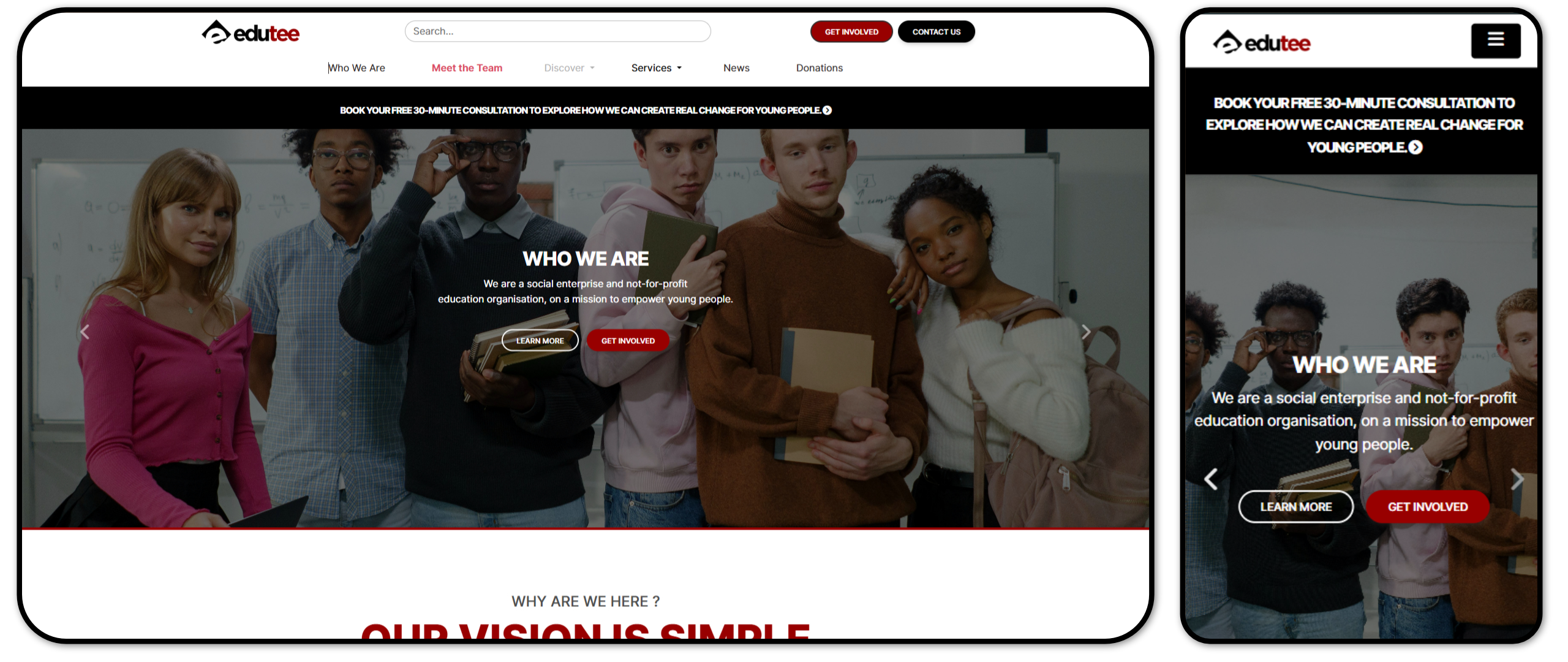
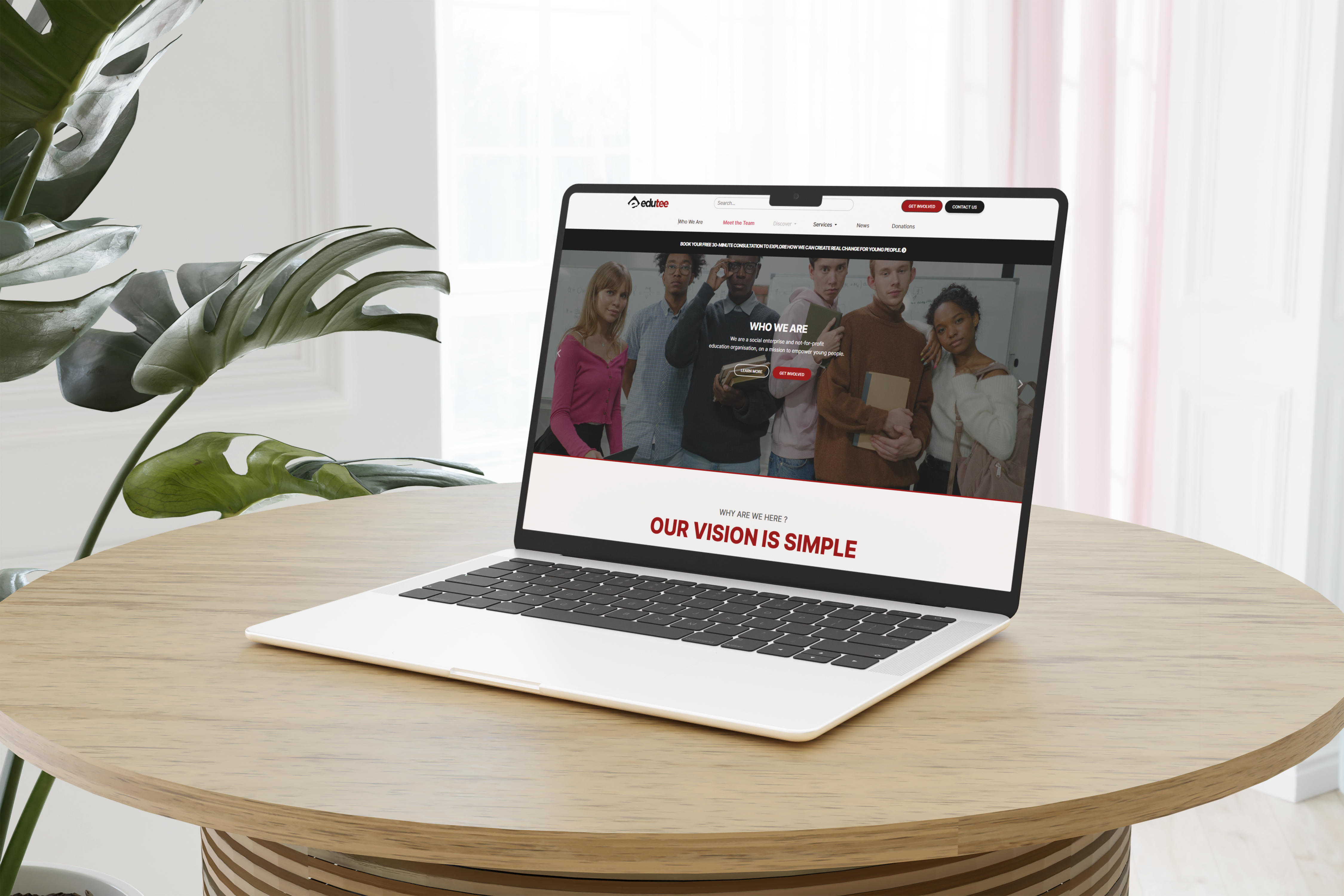
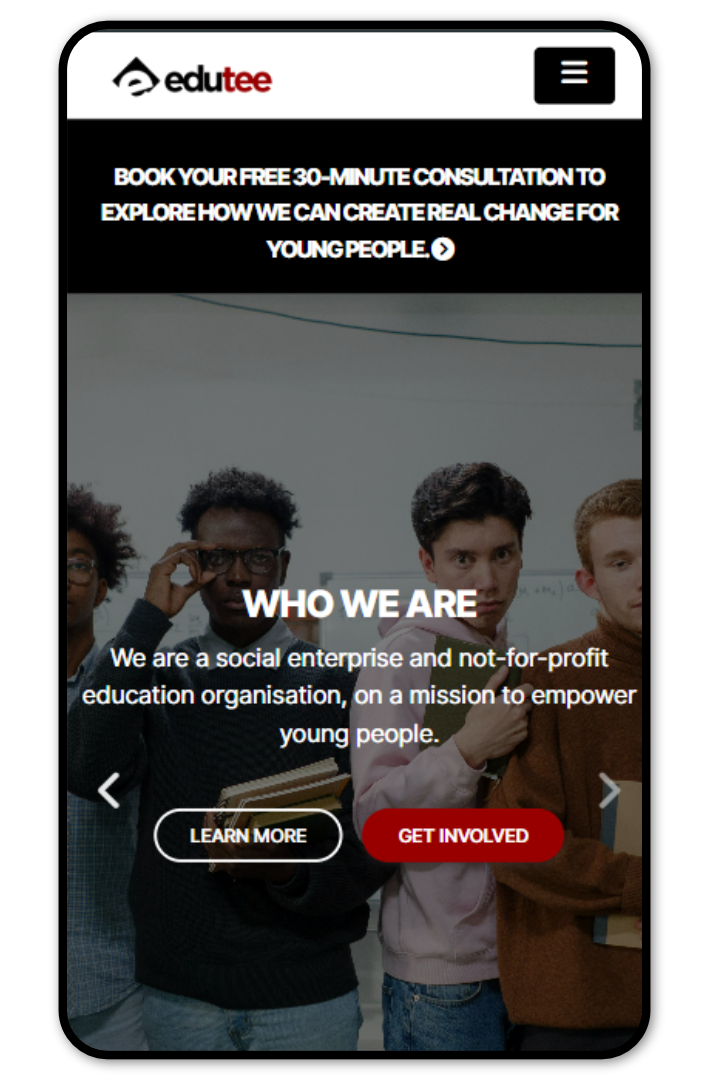
Landing Page

Establishes the platform’s purpose and credibility while serving as the main user entry point.

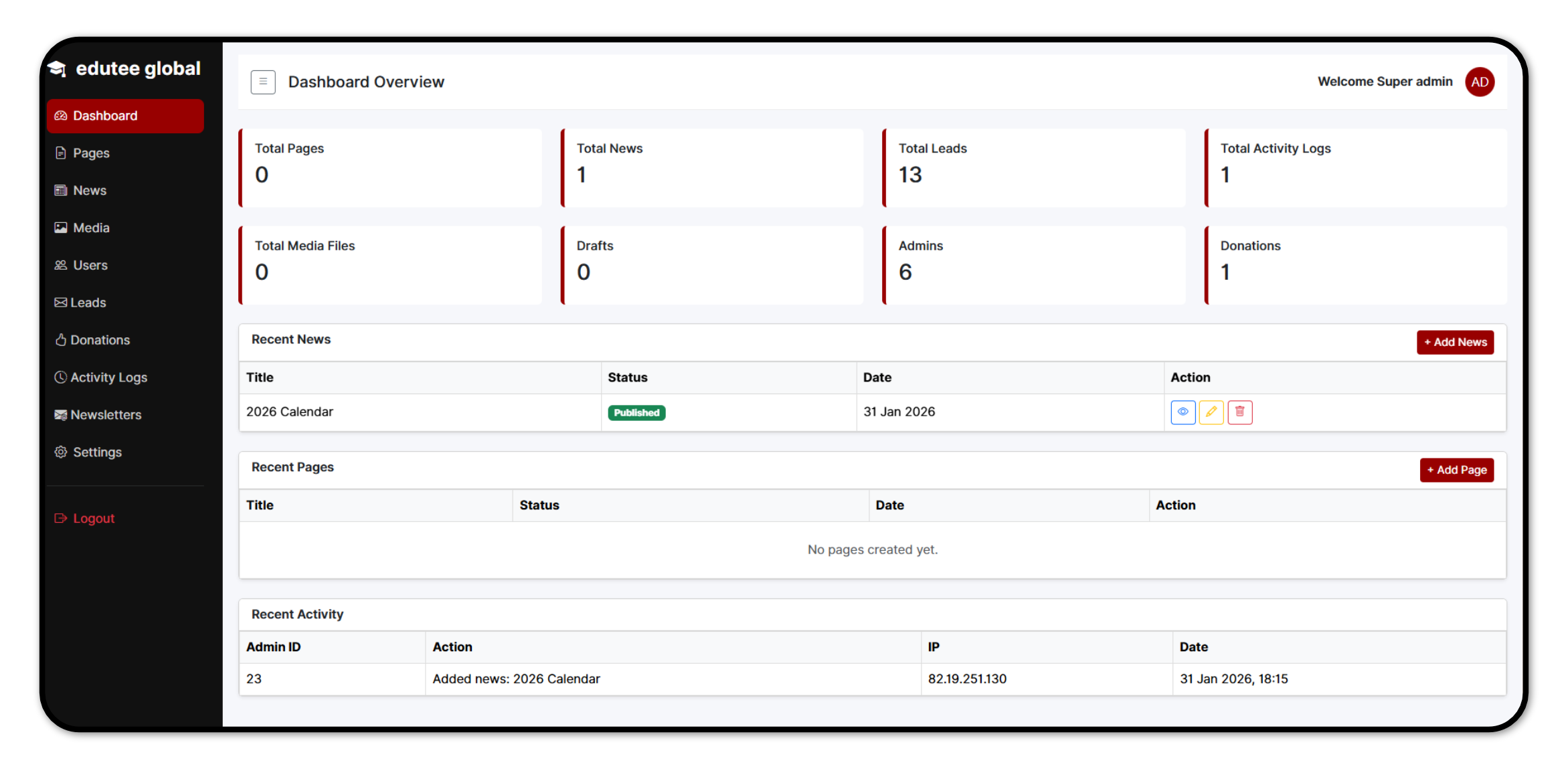
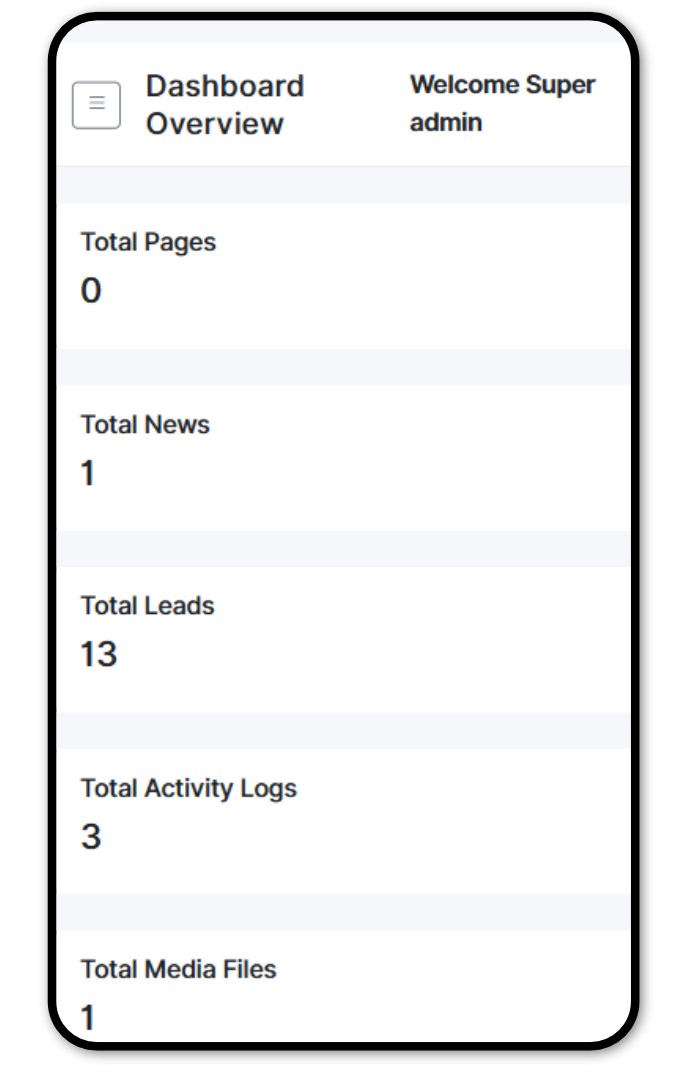
Admin Dashboard Overview

Provides administrators with visibility into platform activity and system health.

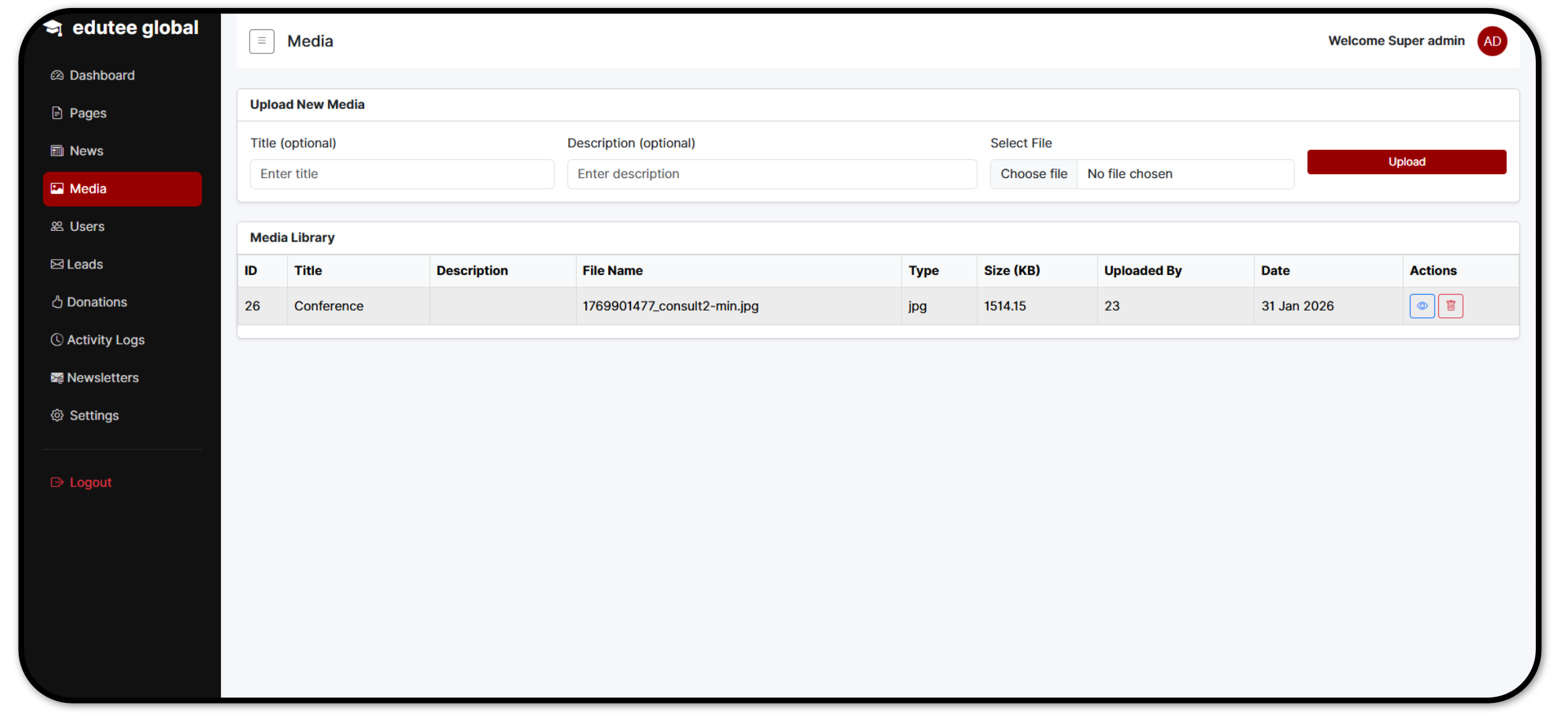
Content Management System (CMS)

Allows non-technical staff to manage content independently, reducing operational dependency.

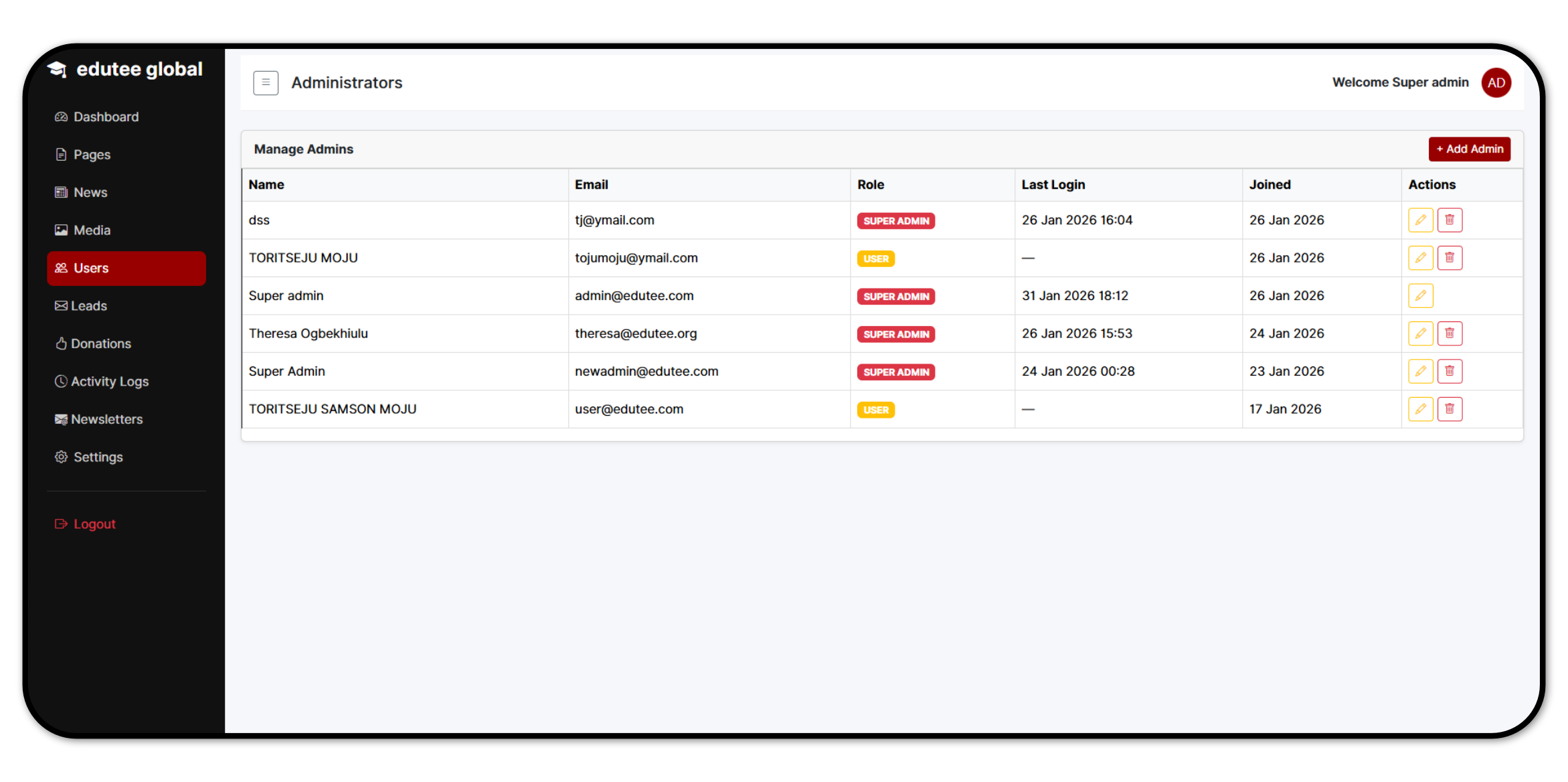
User & Role Management

Implements RBAC to ensure correct access levels and secure system usage.

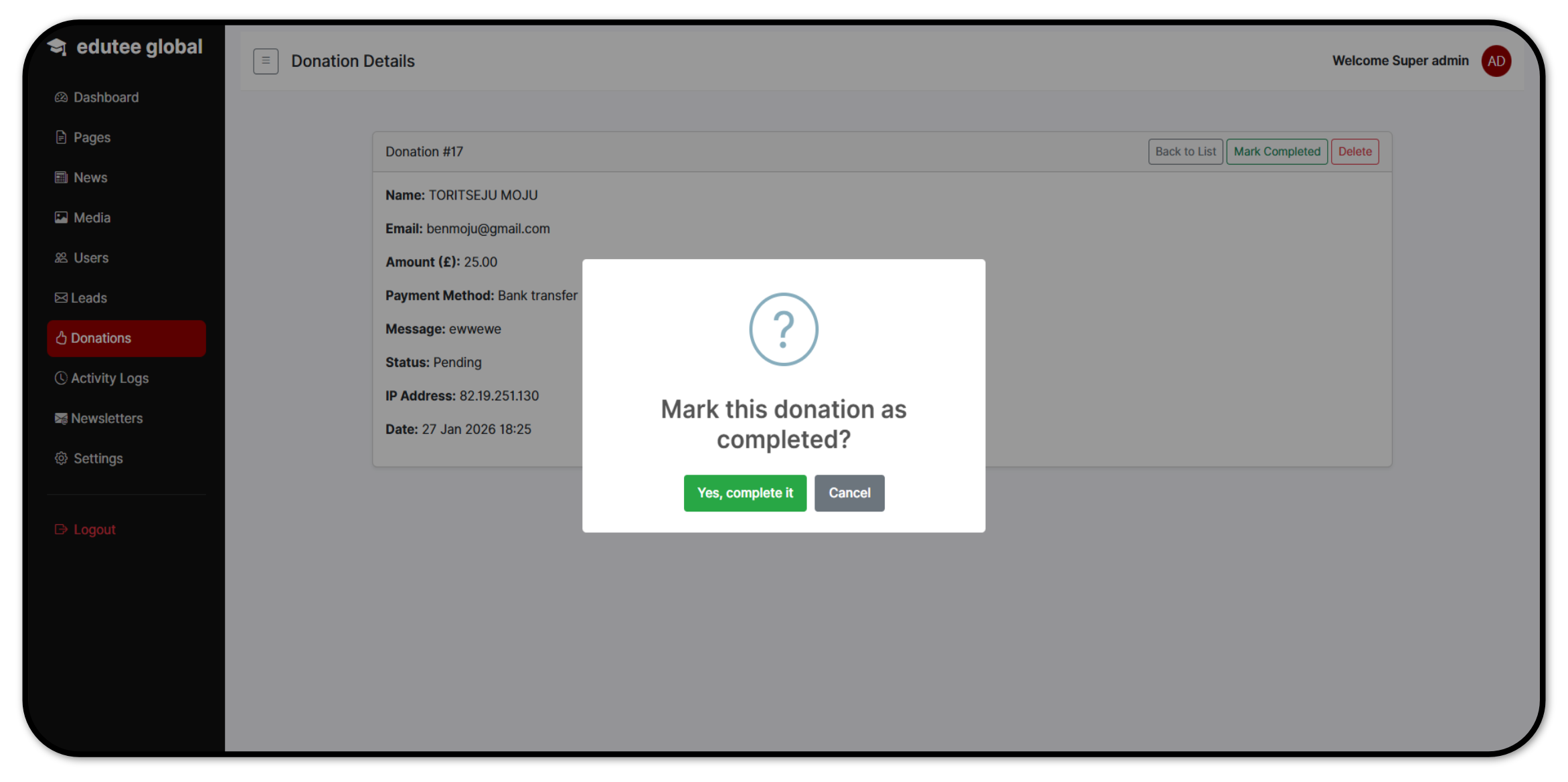
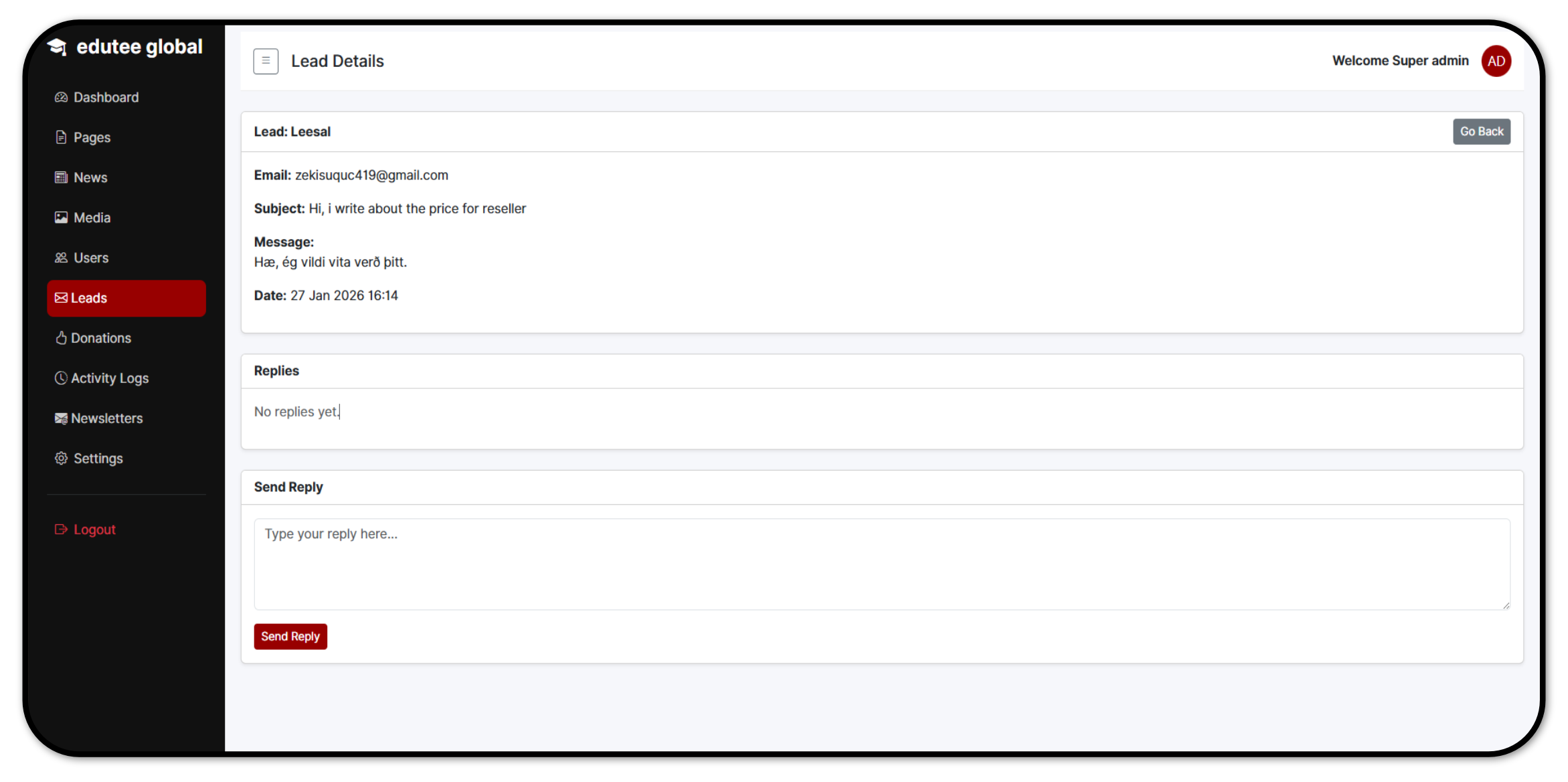
Core Workflow Screen

Shows real business logic in action — not just UI.

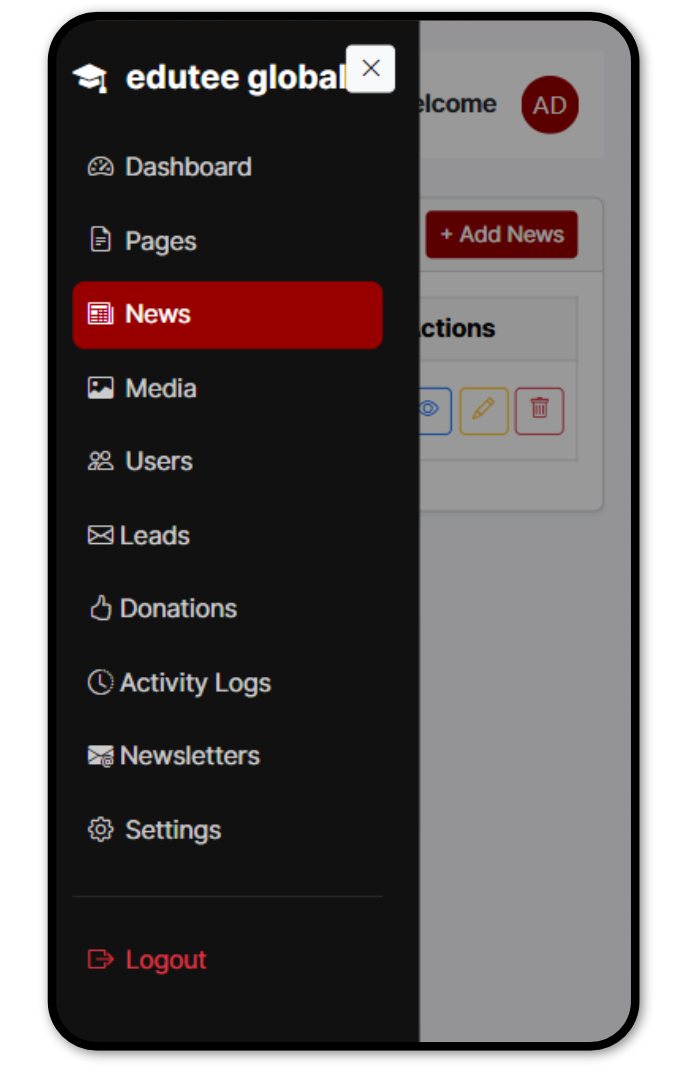
Responsive View
System Flow / Architecture

Tech Stack

Frontend: React, HTML, CSS, JavaScript
Backend: PHP, MySQL
Features: CMS, Admin Dashboards, RBAC
Design: Figma (UX flows, dashboard structure)

Impact & Outcomes

  • Reduced manual admin tasks by 40%
  • Improved workflow efficiency by 35%
  • Enabled non-technical staff to manage operations independently
  • Delivered a scalable foundation for future growth

Reflection

This project reinforced the importance of designing internal tools with the same care as public interfaces. Building systems that non-technical users can confidently operate reduces friction, improves adoption, and allows teams to scale without increasing operational overhead.
B2B AI Platform — AI Agent Management SaaS

Software Engineer (Product Teams) - View Project

Overview

The platform enables businesses to deploy, configure, and manage multiple AI-powered agents for operational automation. These agents support real-time communication, task execution, and workflow automation across customer-facing and internal processes. The challenge was to build a scalable, intuitive SaaS interface that allowed non-technical users to configure AI agents while maintaining system flexibility and reliability.

My Role

I worked as a Software Engineer on the product team, contributing across the full product lifecycle: product-focused frontend development, UX-to-code execution, AI service integrations, translating business requirements, and improving system usability and reliability. This required close collaboration with product stakeholders and engineers.

Solution & Product Thinking

The solution focused on clarity, configurability, and control: a central dashboard, structured agent setup flows, visibility into agent behaviour, modular interfaces, and UX patterns that surface AI behaviour transparently. Designs were aligned closely with backend logic to ensure predictable system behaviour.

Key Screens & Features

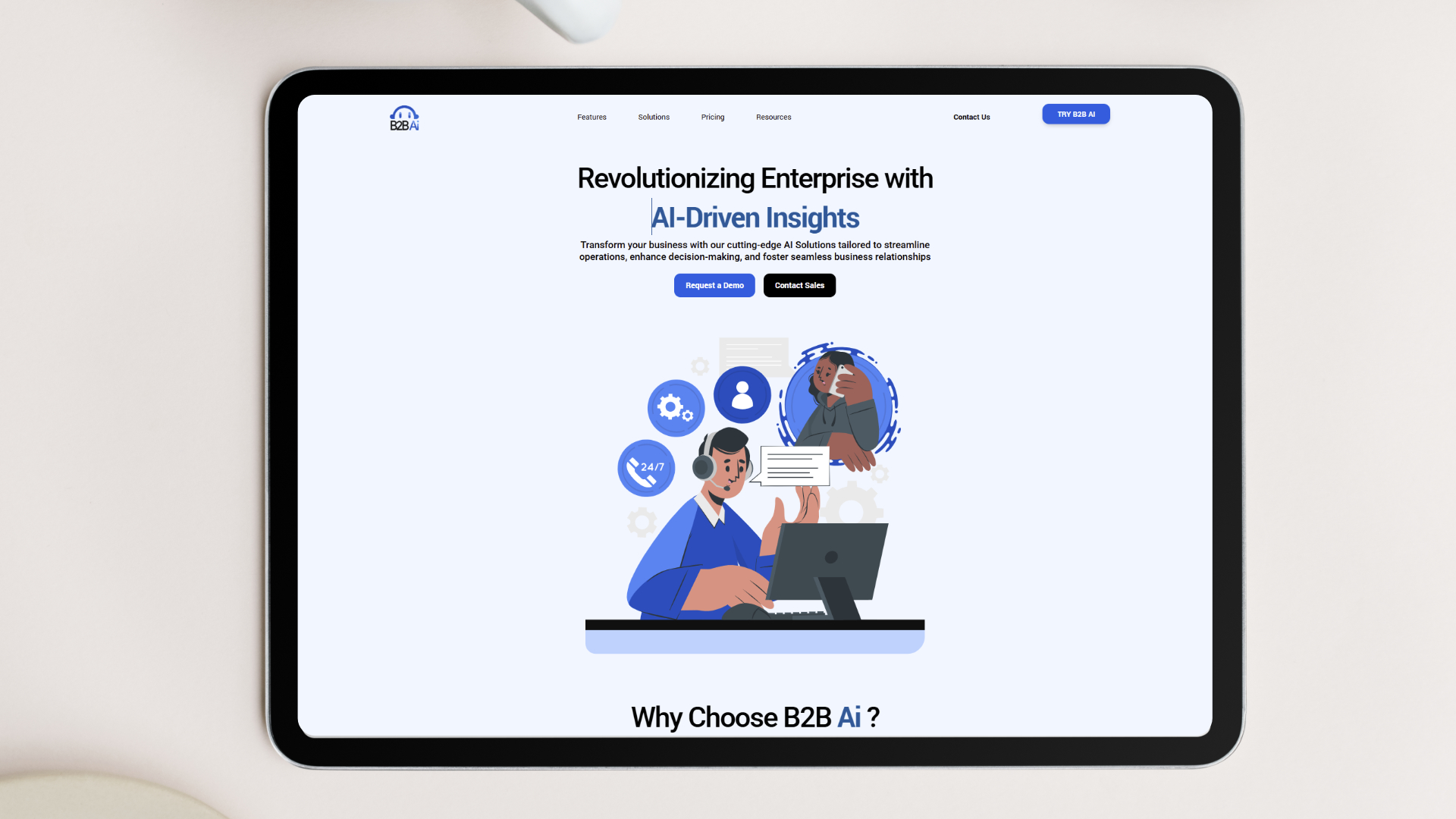
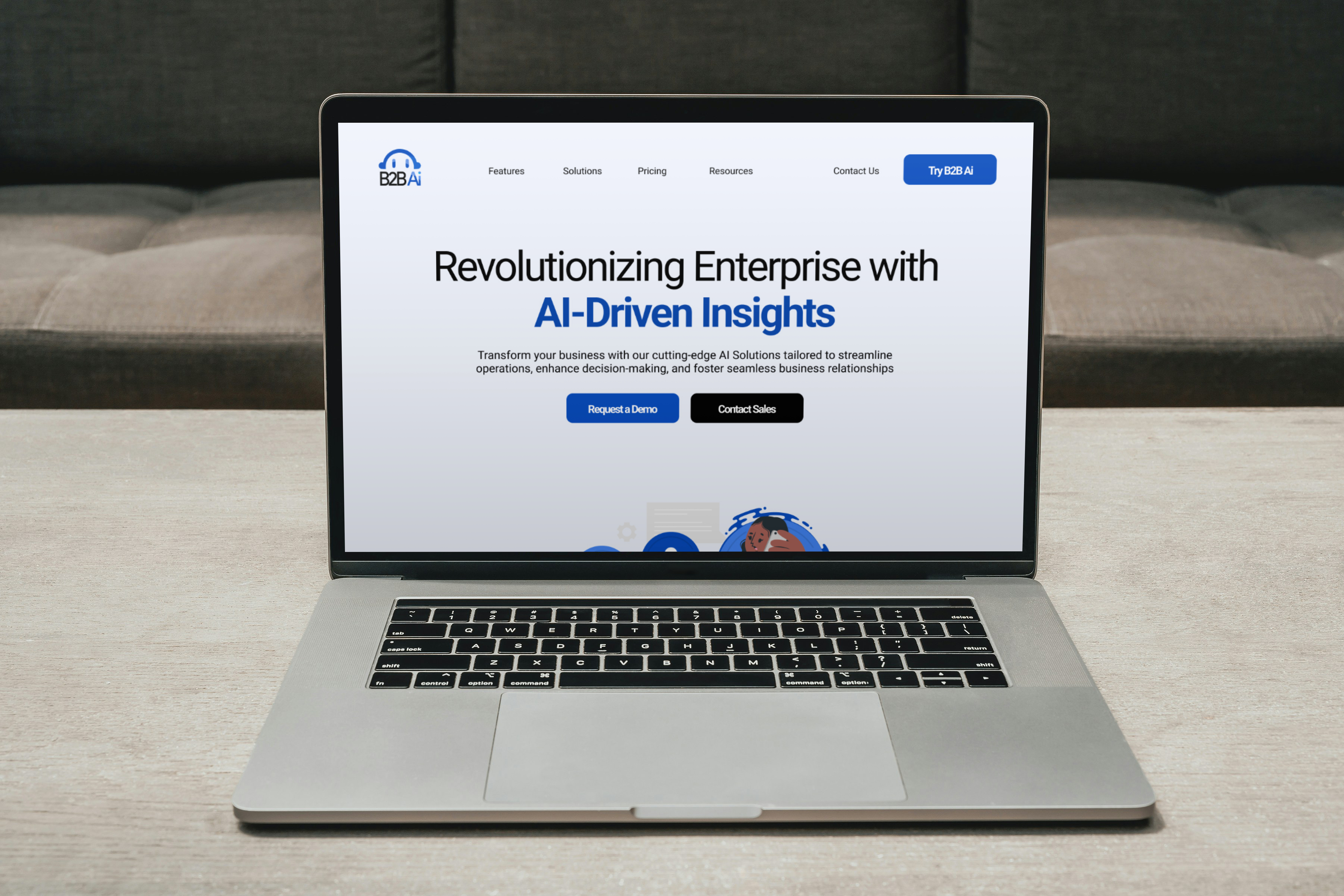
1️⃣ Platform Landing Page

Establishes product positioning, explains the value of AI agents, and provides context for new users.

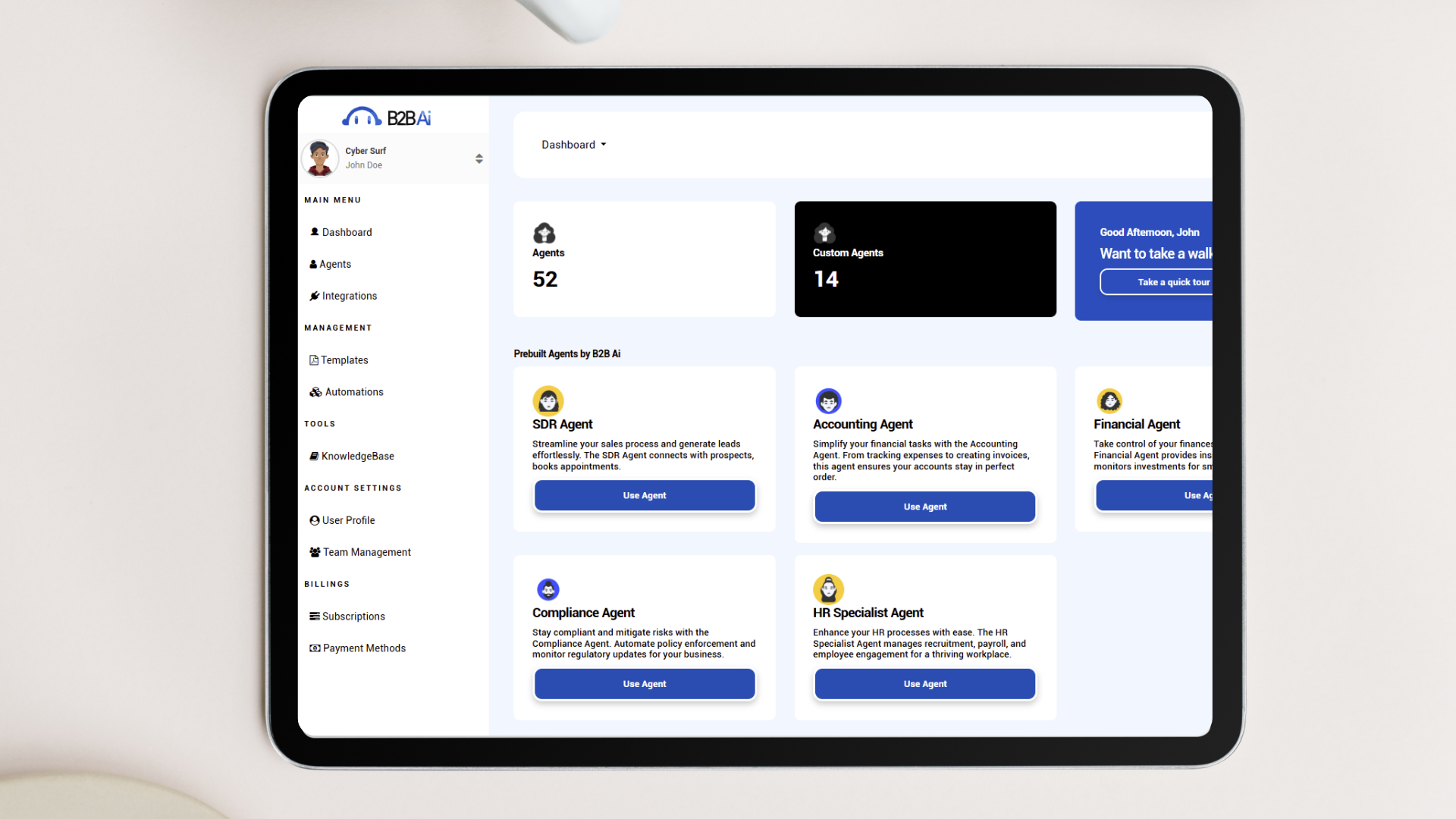
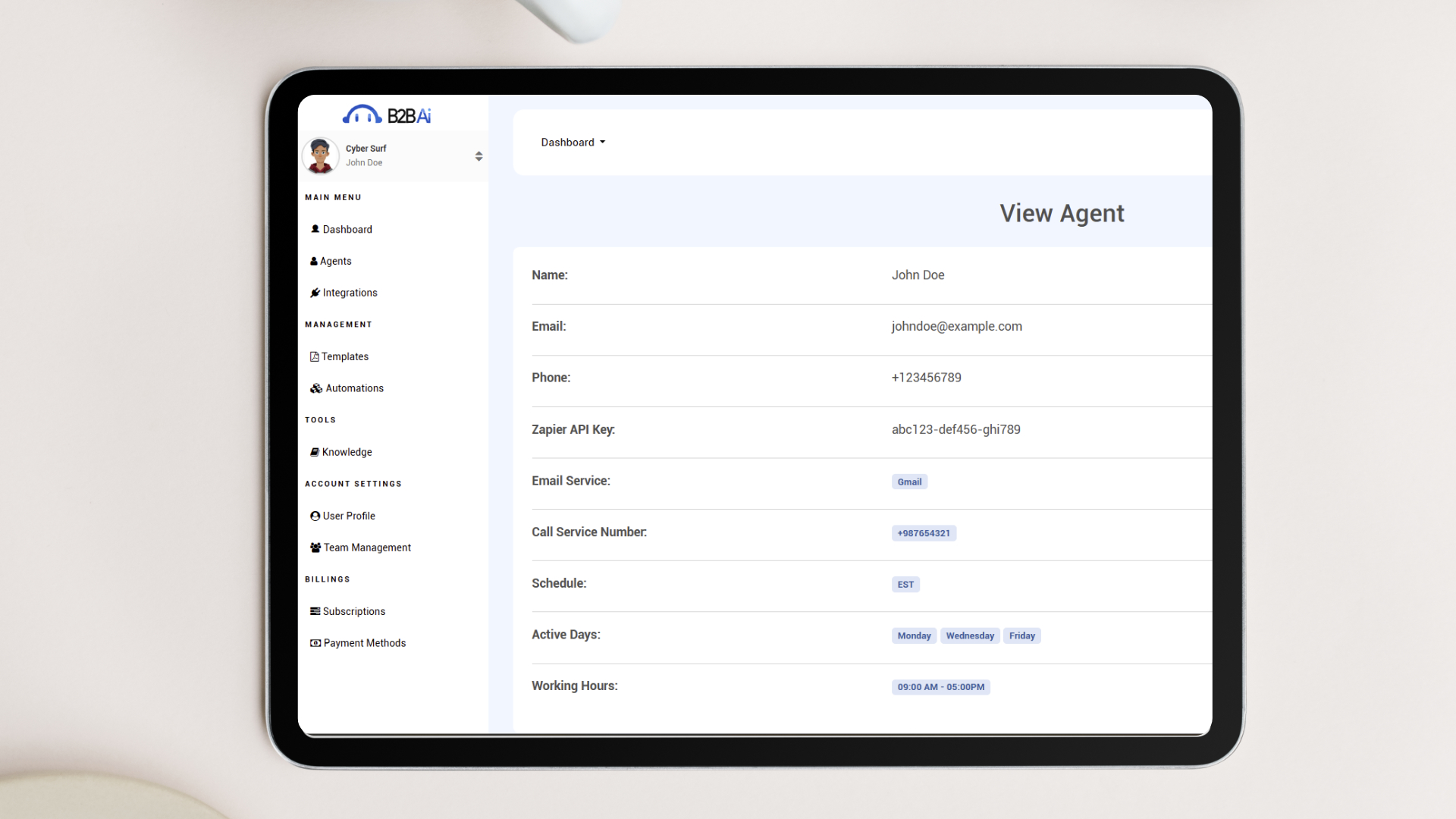
2️⃣ Main User Dashboard

Acts as the operational control centre for users managing multiple AI agents.

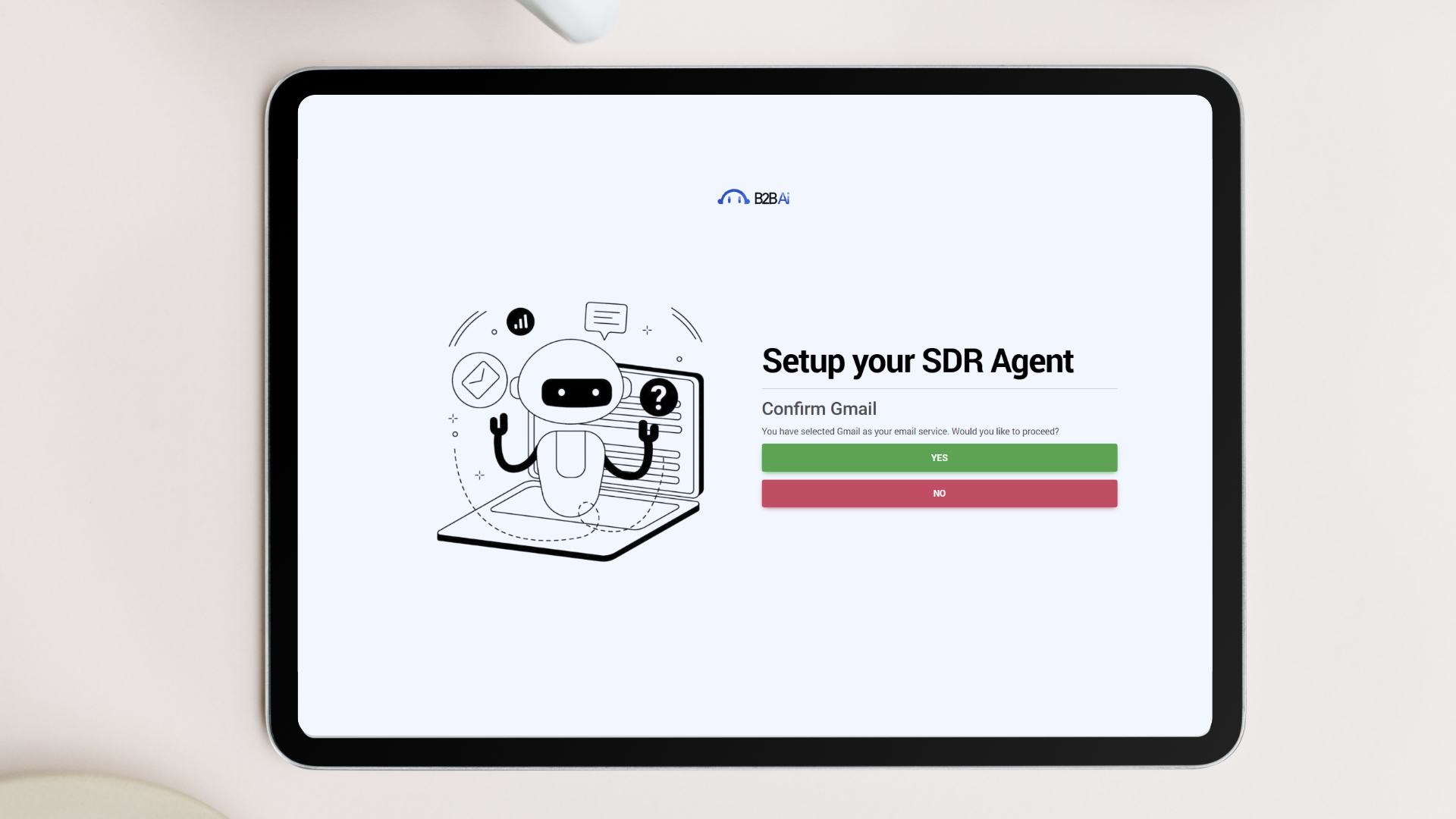
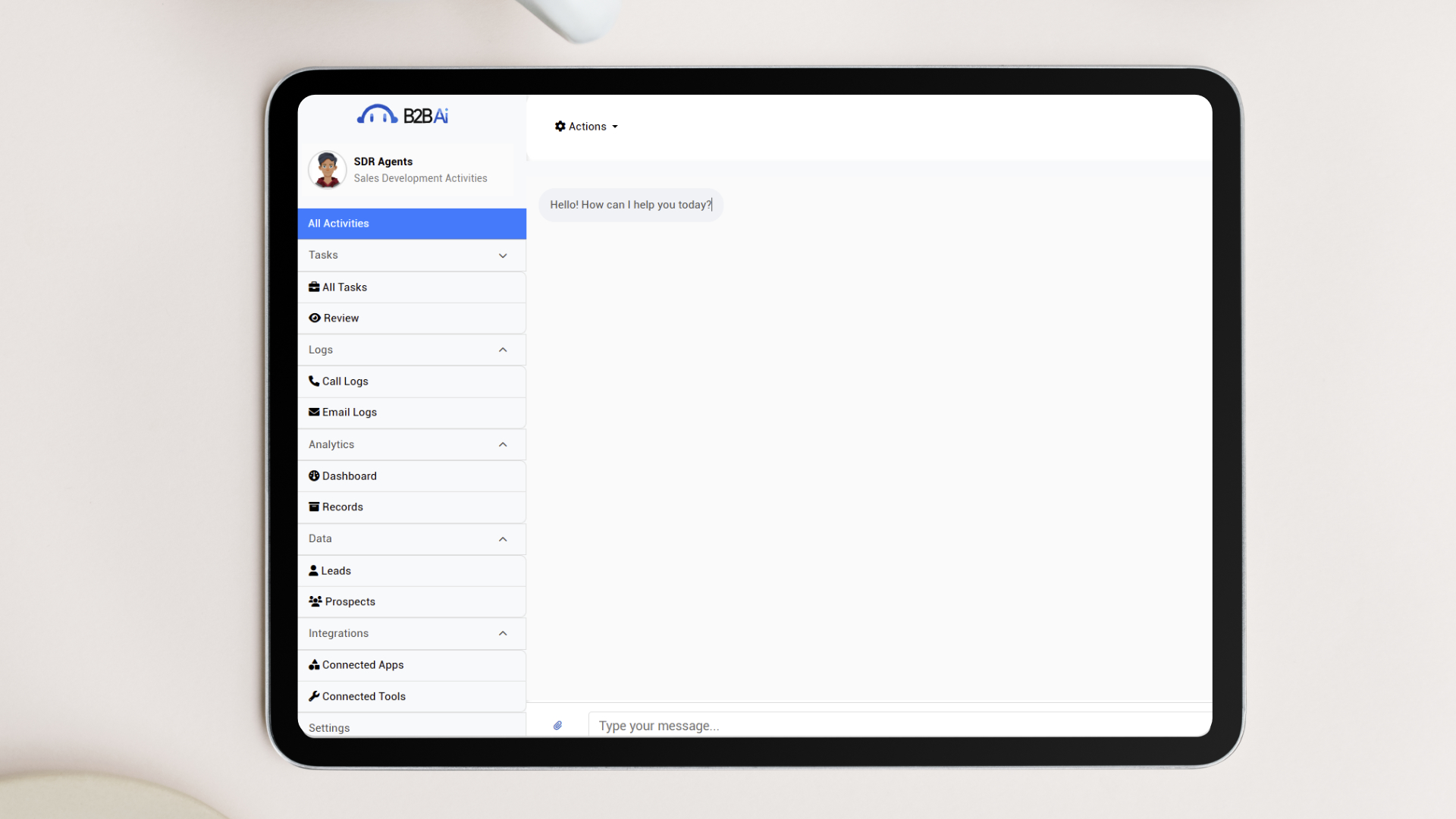
3️⃣ AI Agent Setup (Most Important)

Shows how complex AI logic is abstracted into a usable setup flow for non-technical users.

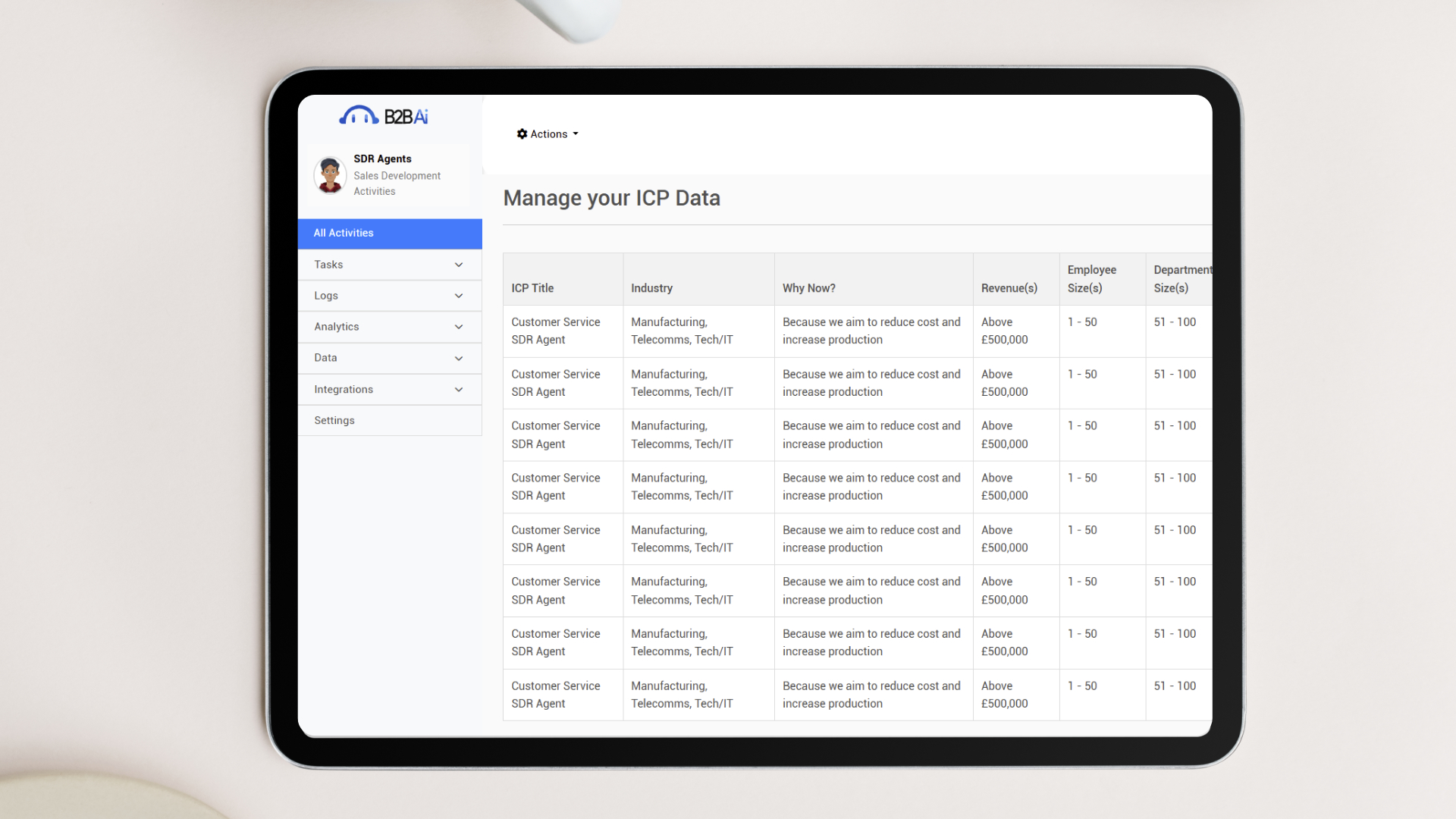
4️⃣ Agent Configuration & Logic

Highlights how users define agent behaviour, rules, and automation logic.

5️⃣ Workflow / Automation View

Makes AI behaviour transparent and debuggable, building trust in automated systems.

6️⃣ Integrations & Communication Channels

Shows real-world system integration and multi-service orchestration.

Tech Stack

Frontend: HTML, CSS, JavaScript, React.js
Backend & Services: AI APIs (GPT-based), third-party integrations, Python
Platform Features: SaaS dashboards, agent workflows, automation logic
Design: UX flows aligned with backend capabilities

Impact & Outcomes

  • Improved operational efficiency by up to 30%
  • Reduced delivery friction and rework by 20%
  • Enabled scalable deployment of multiple AI agents
  • Improved system usability and reliability

Reflection

This project strengthened my ability to design and build AI-enabled products that balance power with usability. It reinforced the importance of making AI behaviour visible and controllable — a principle I continue to apply in product-focused engineering.

Noron Marque — HR Management System

Enterprise HR & Career Management Platform • Product Engineer - View Project

Overview

The organisation required a centralised HR and career management system to manage employee records, career progression, and internal workflows. Existing processes were manual, fragmented, and difficult to scale as the workforce grew. The goal was to design and build an enterprise-grade platform that provided visibility, control, and efficiency for HR administrators while remaining clear and usable for employees.

My Role

I worked as a Product Engineer, responsible for backend logic, database modelling, frontend UI for admin and employee dashboards, admin tooling, UX decisions for data-heavy interfaces, and system optimisation. This role required balancing complex business rules with a usable interface for daily operations.

Solution & System Design

The system was designed around clarity, structure, and scalability: role-based access, centralised employee records, admin dashboards, modular features, and consistent UI patterns for navigating complex datasets. Designs were informed by real HR workflows and aligned closely with backend data models.

Key Screens & Features

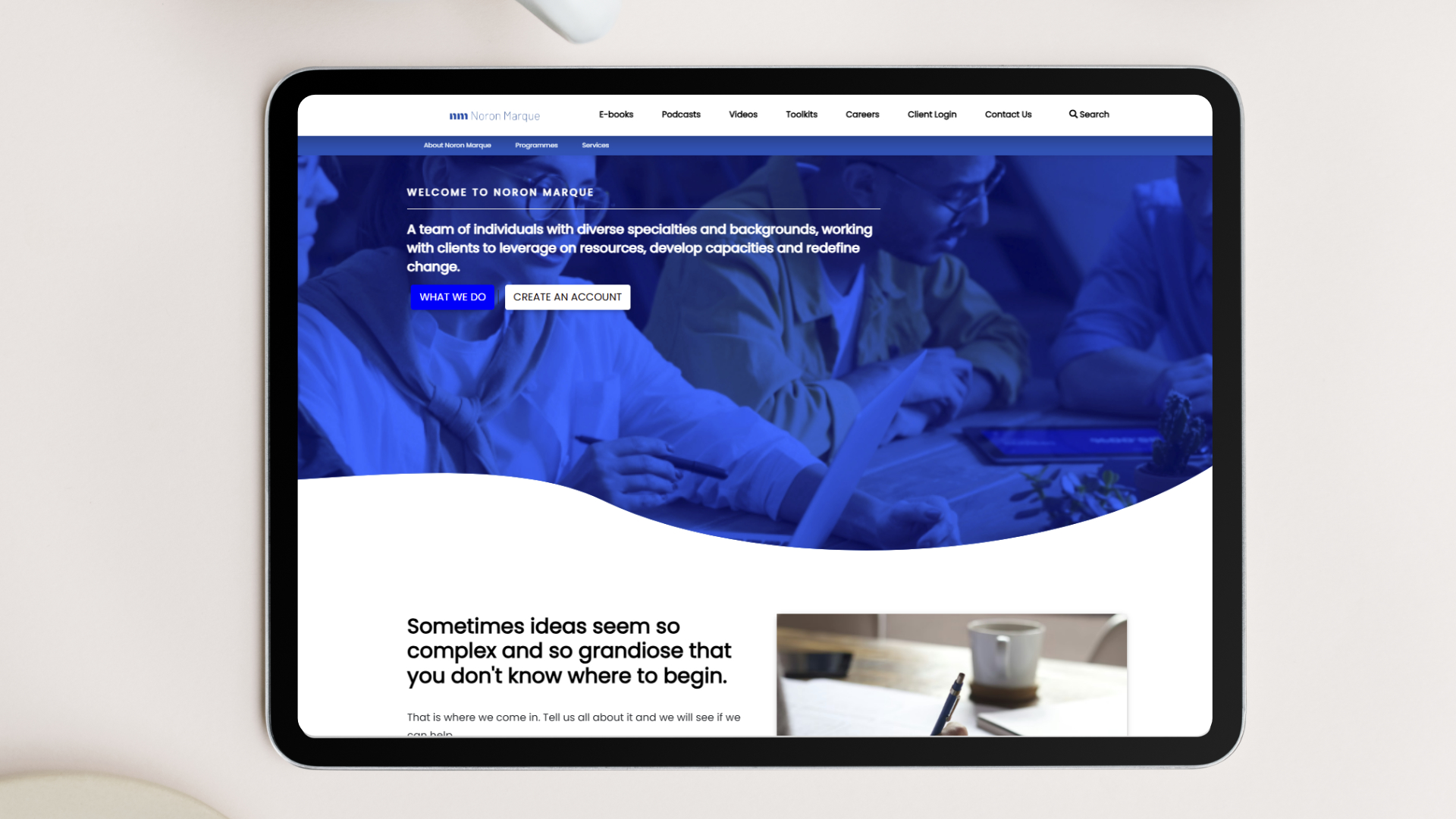
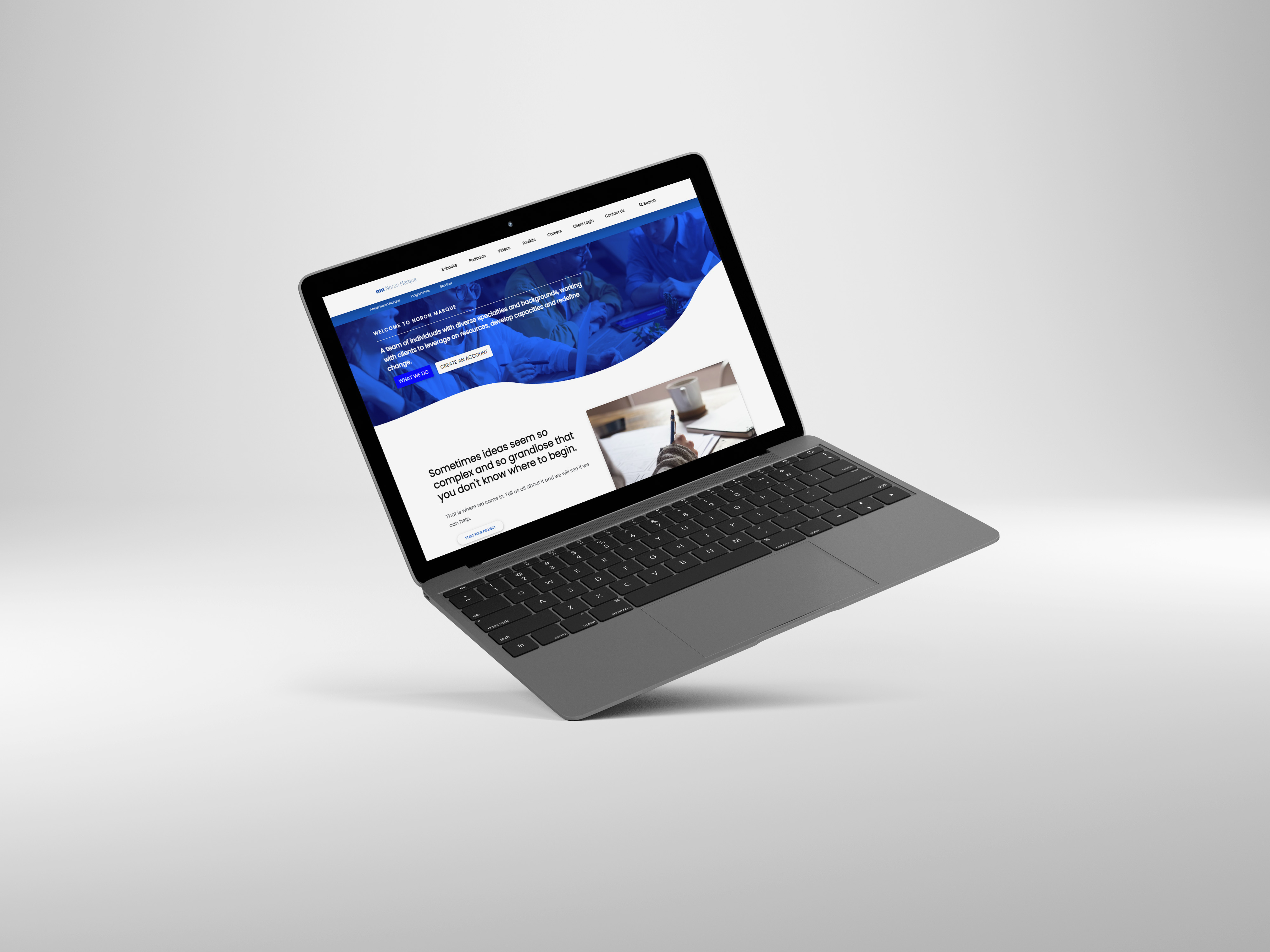
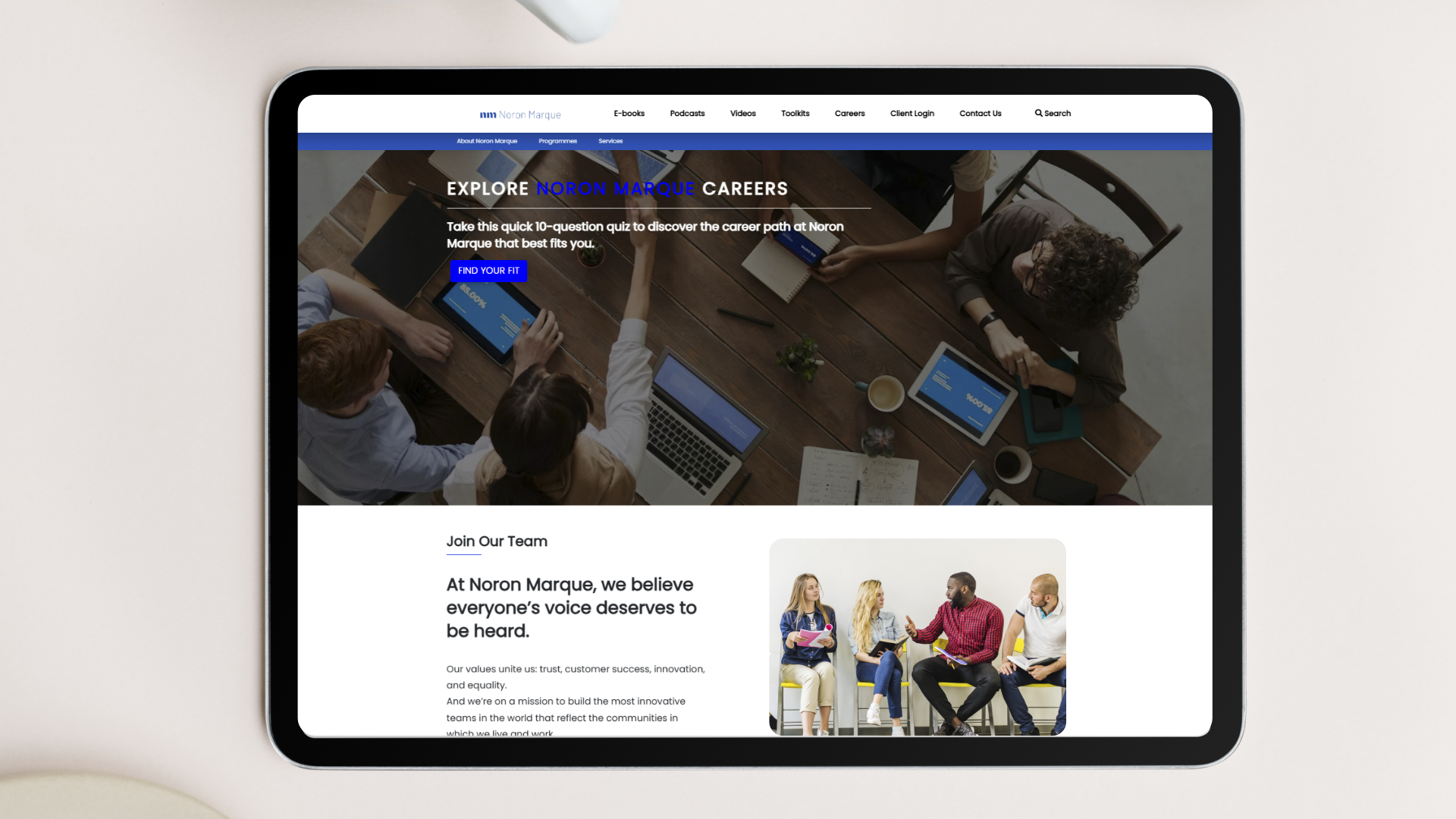
1️⃣ Public Landing Page

Provides context for the platform and establishes it as a formal enterprise system.

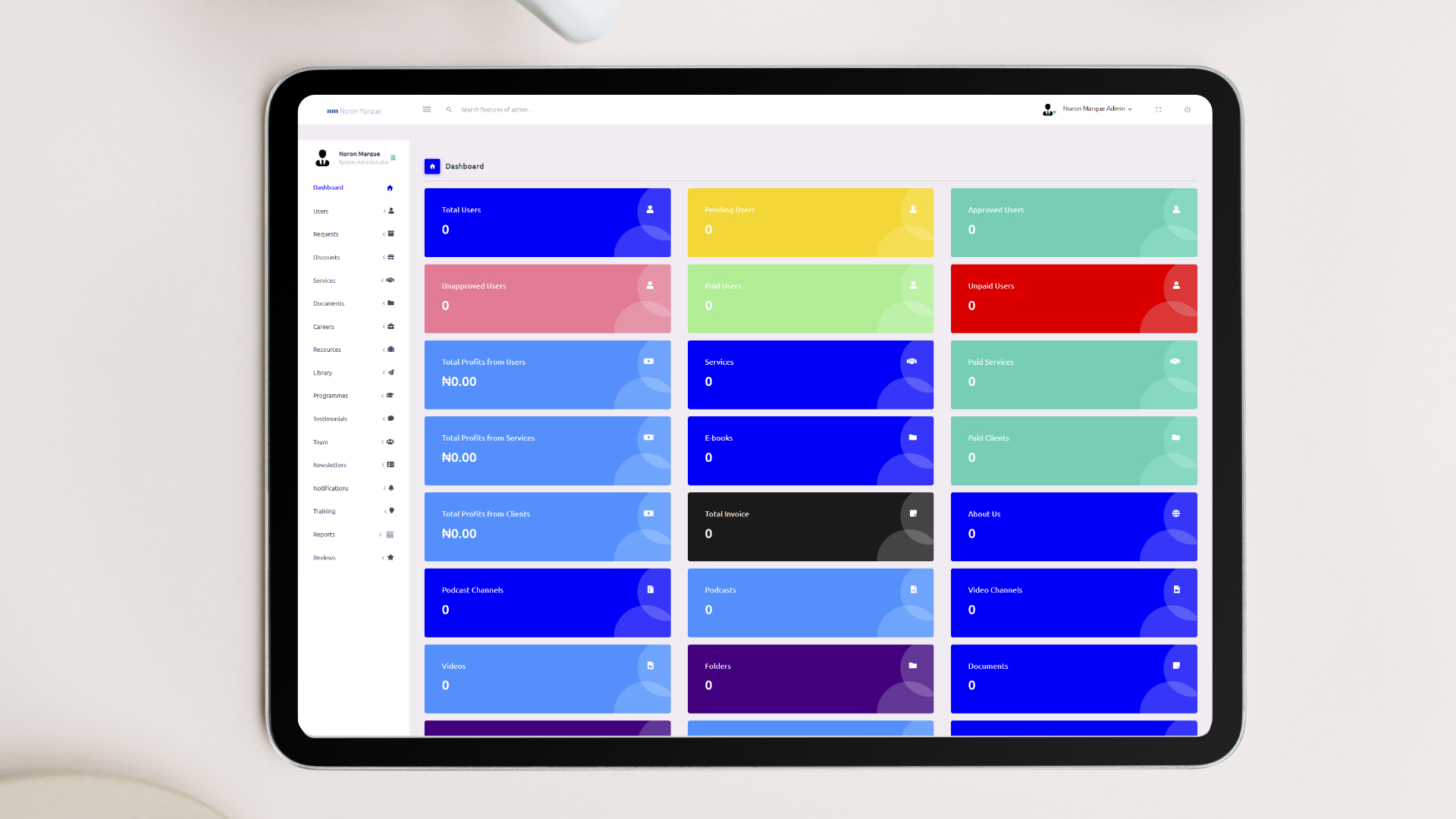
2️⃣ Admin Dashboard Overview

Acts as the operational control centre for HR teams managing large datasets.

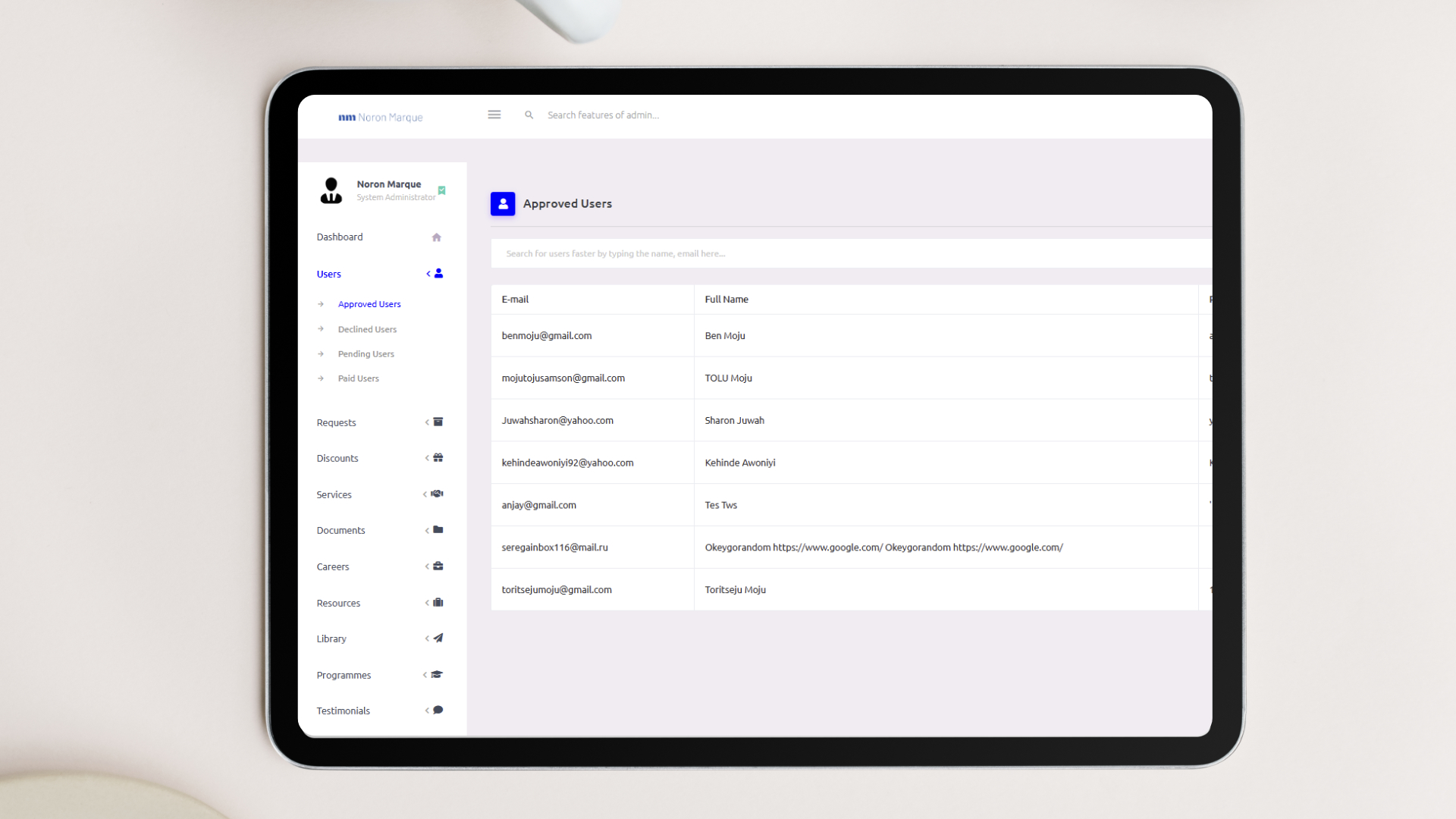
3️⃣ Employee Records Management

Shows structured data handling and CRUD workflows at scale.

4️⃣ Career & Role Management

Demonstrates domain understanding beyond basic HR features.

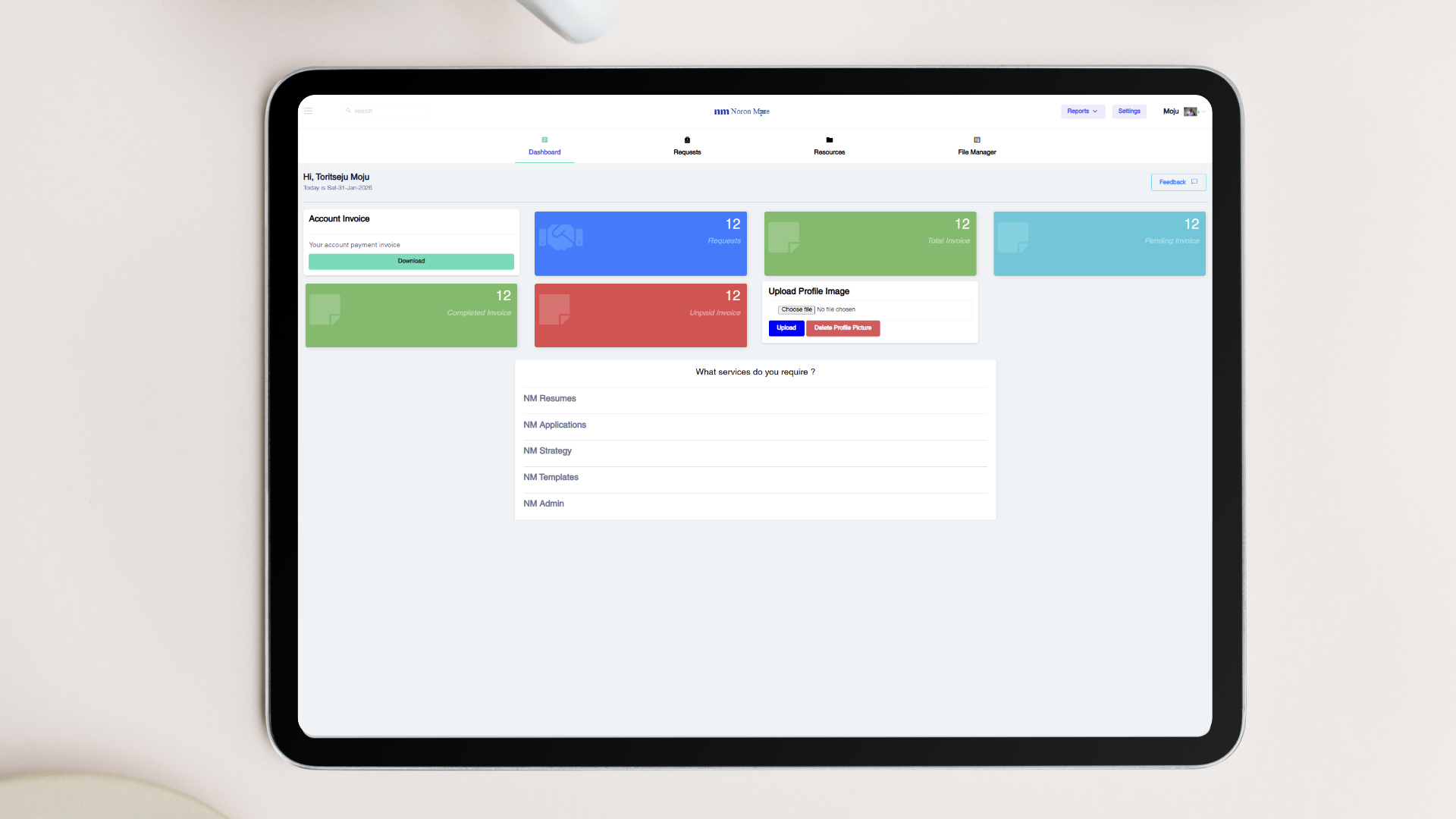
5️⃣ Employee Dashboard

Shows multi-role UX thinking — different users, different needs.

Tech Stack

Frontend: HTML, CSS, JavaScript, React.js
Backend: PHP Laravel, MySQL
System Features: Admin dashboards, RBAC, data management workflows
Design: UX patterns optimised for data-heavy enterprise systems

Impact & Outcomes

  • Supported structured management of 500+ employee records
  • Reduced manual HR data entry by 15% through automation
  • Improved operational visibility for HR administrators
  • Delivered 95%+ of project milestones on schedule

Collaboration & Delivery

Worked with stakeholders to define HR workflows and requirements, collaborated with developers to align UI decisions with backend constraints, and delivered features iteratively to meet enterprise expectations for reliability and accuracy.

Reflection

This project reinforced the importance of clarity and consistency when designing enterprise systems. Small UX improvements — such as clear data grouping and predictable navigation — had a significant impact on usability in a data-heavy environment.

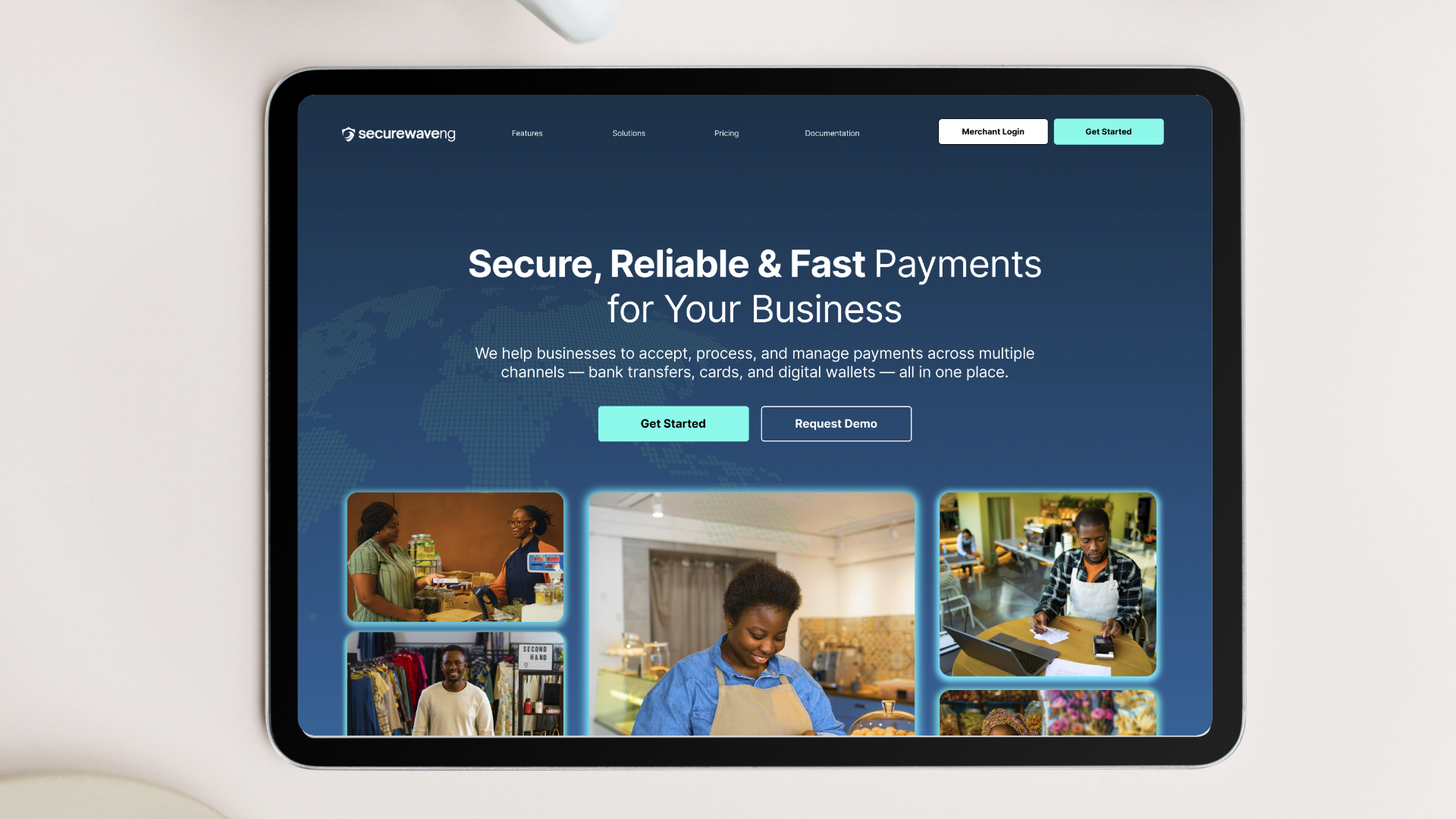
SecureWave NG — FinTech Platform

Secure Payments & Developer Dashboard • Product Designer / UI Engineer

UI/UX & systems design in a regulated FinTech environment

Overview

SecureWave NG is a FinTech platform designed to support payments, virtual accounts, cards, customer management, and developer integrations. The challenge was to design a secure, multi-role dashboard that made complex financial workflows clear, trustworthy, and usable — without compromising compliance or security.

My Role

I focused on product UX and interface design, working closely with engineers to ensure designs were feasible, aligned with backend data models, and clear for both business users and developers. This included designing dashboards, workflows, and developer tools for a regulated environment.

What I Designed

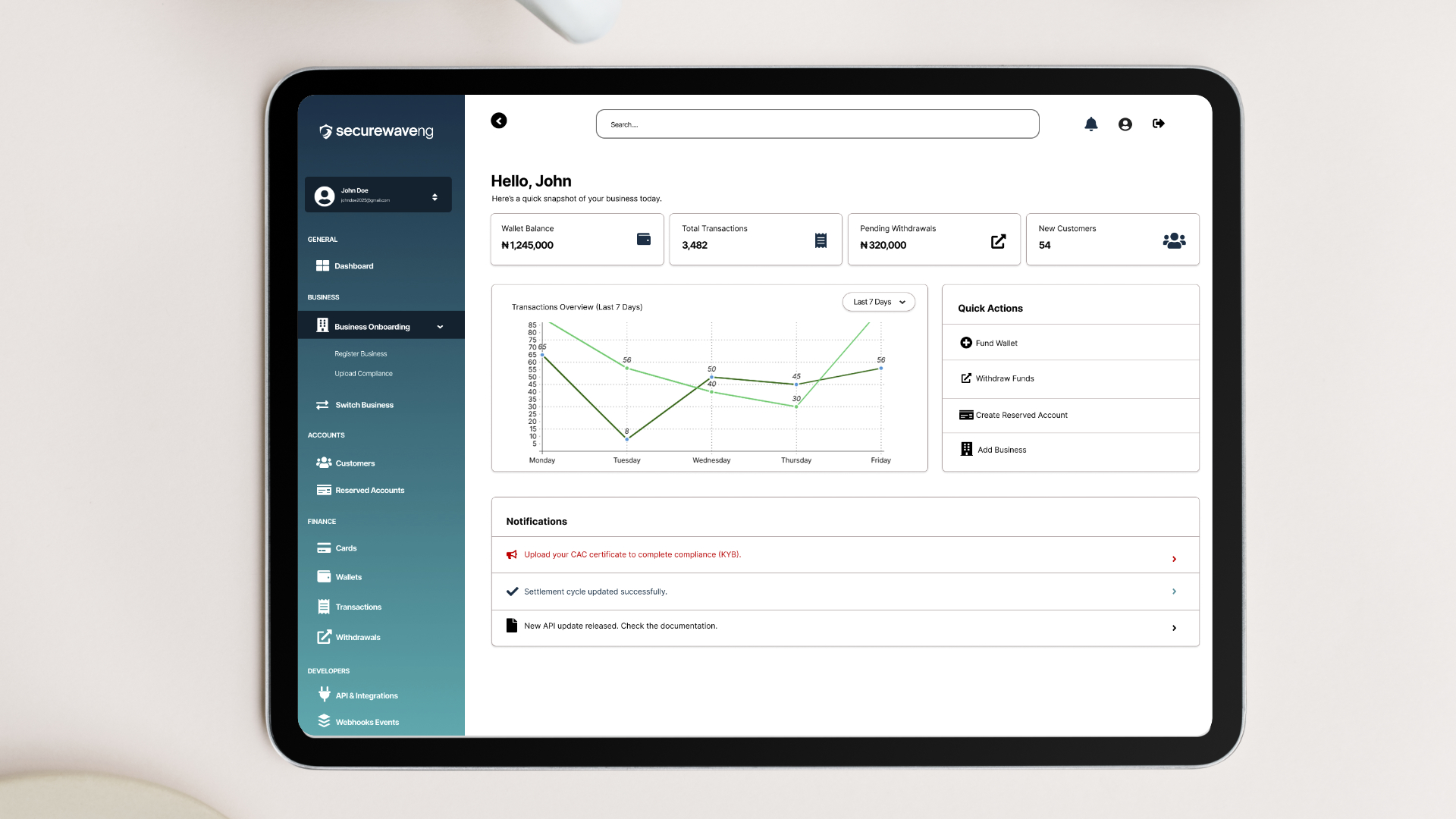
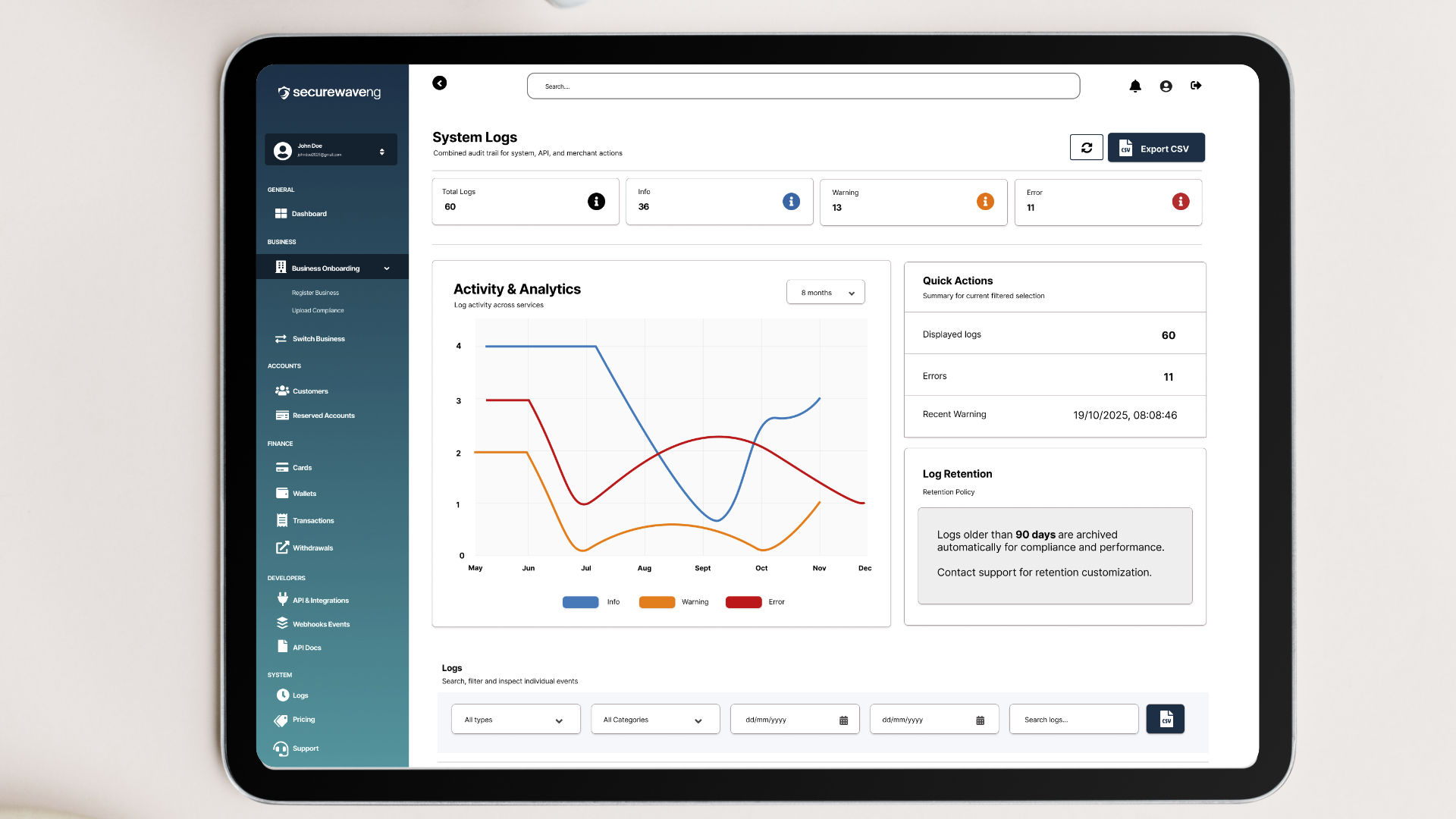
🔹 Business Dashboard

Account balances, transaction visibility, and operational summaries designed with clarity and trust in mind.


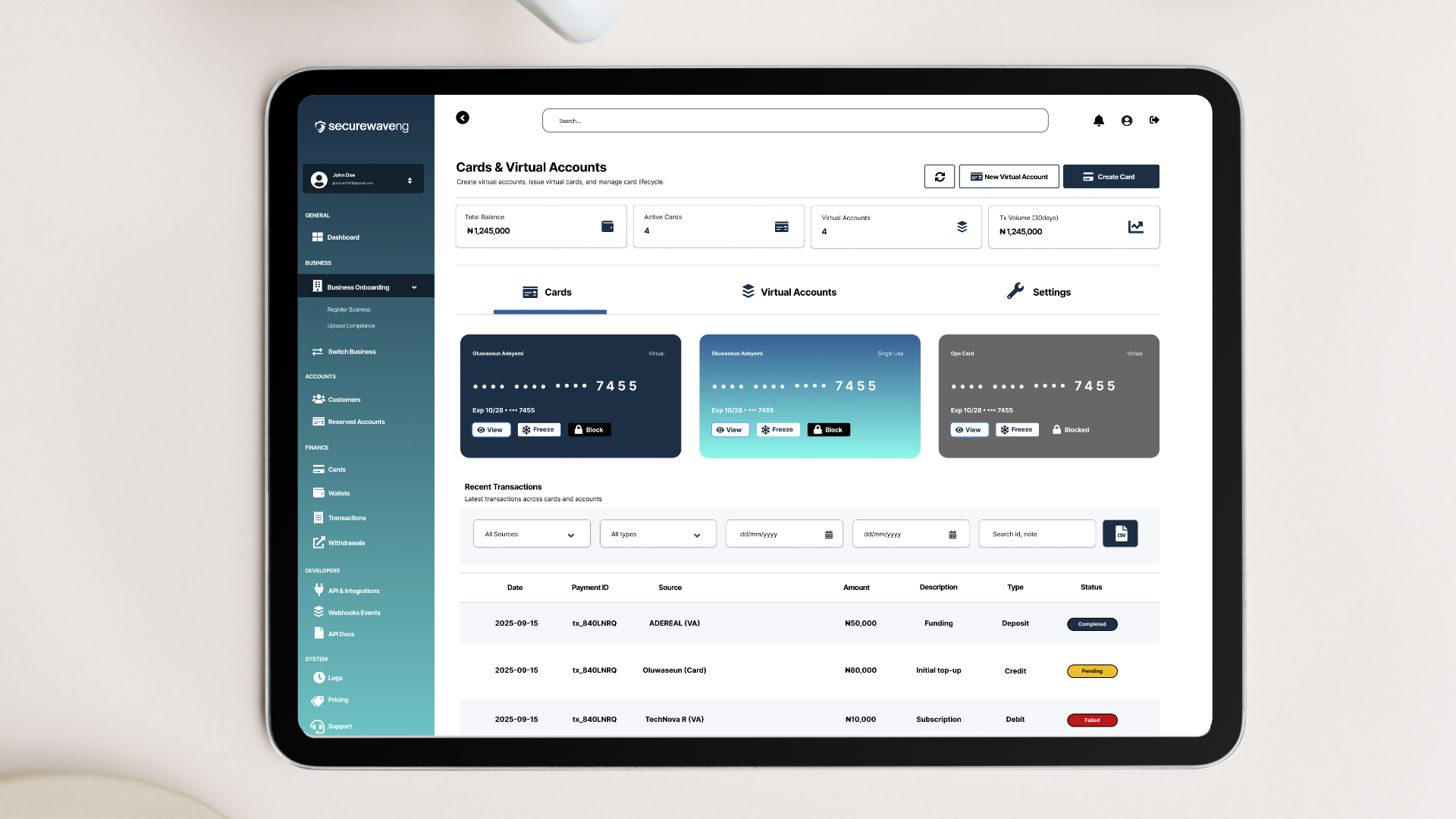
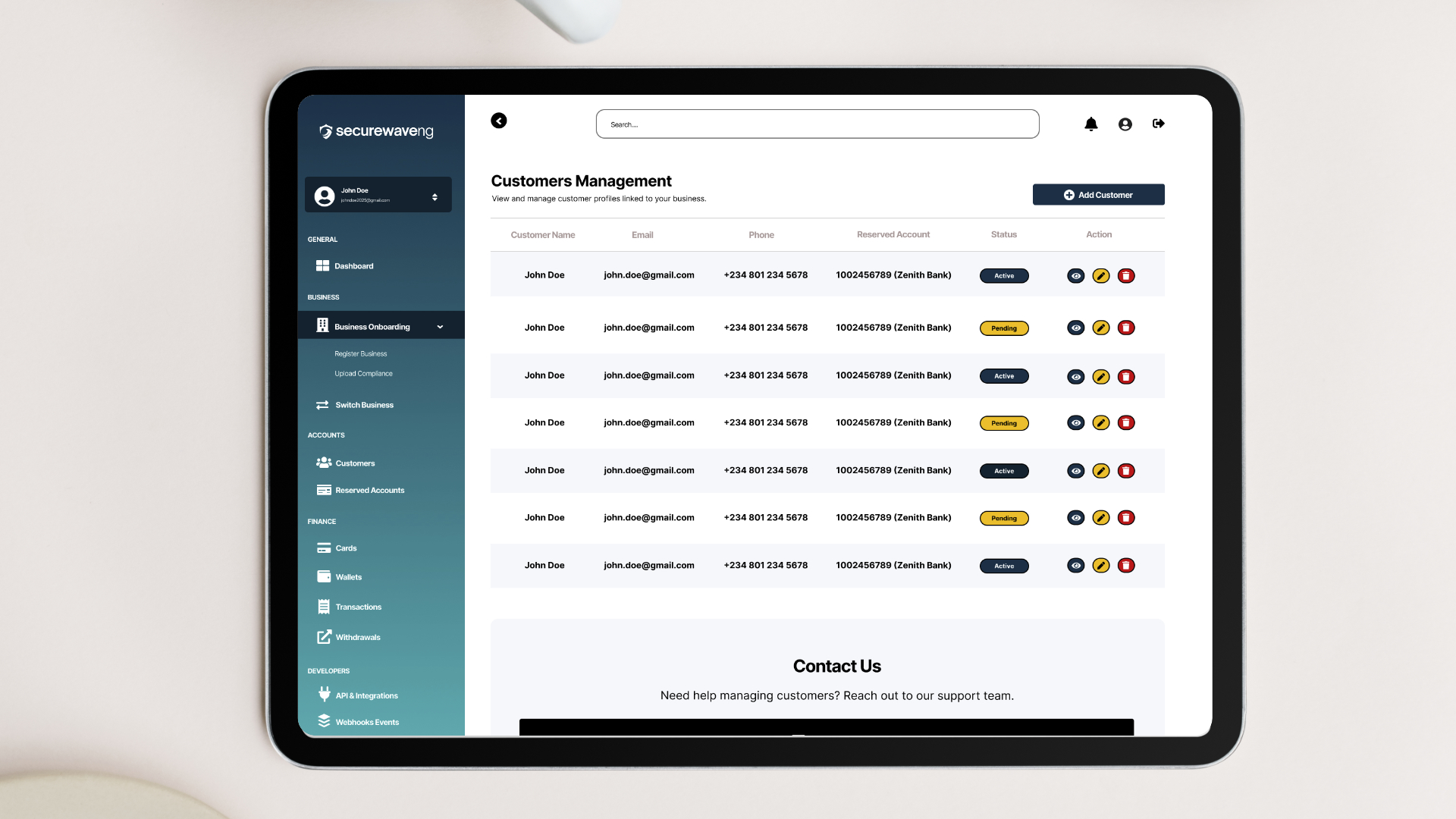
🔹 Customer & Account Management

Structured lifecycle views, virtual accounts, card management, and data-heavy tables optimised for speed and clarity.


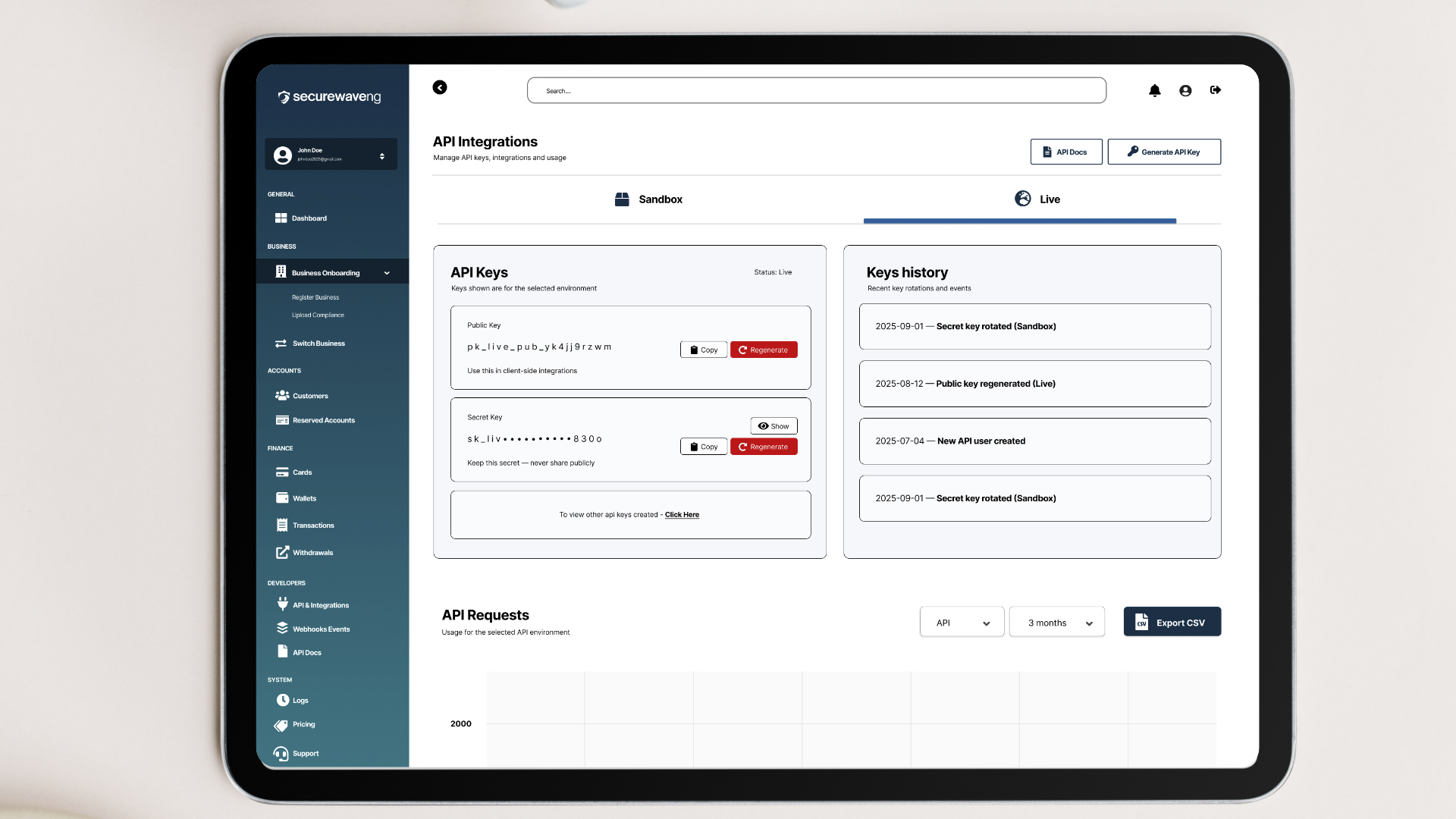
🔹 Developer Tools (Key Differentiator)

API key management, webhook configuration, and a clear separation between business and developer concerns. Designed to help developers self-serve integrations.


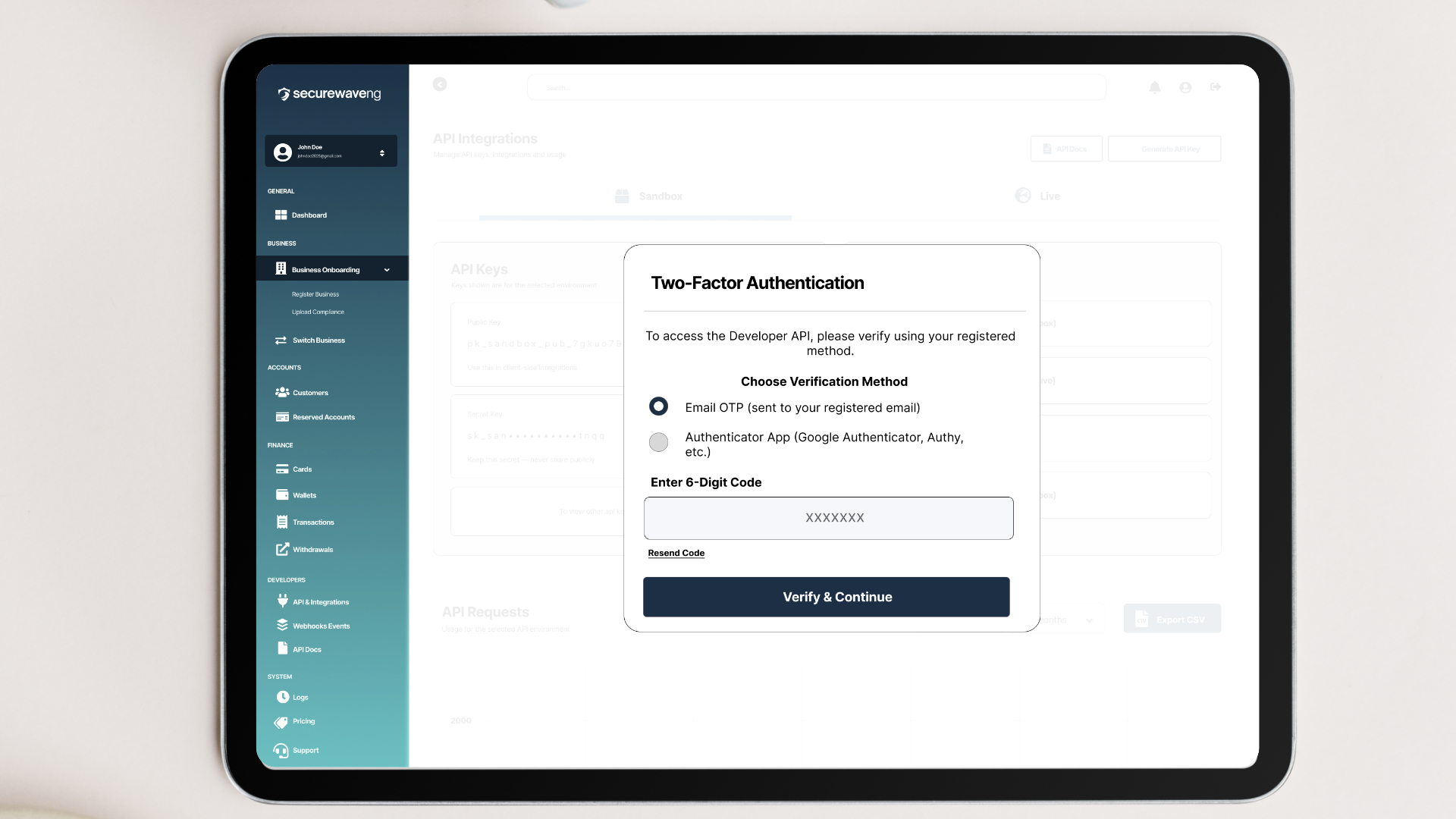
🔹 Security & Authentication

2FA flows, access management, and UX patterns designed to reinforce trust, control, and compliance.

Design & System Thinking

The platform was designed around clarity, strong visual hierarchy, explicit system states, and UX patterns aligned with backend logic to reduce implementation friction. Early concepts were explored in Figma and refined through collaboration with engineering.

Impact

  • Improved clarity across complex financial workflows
  • Reduced user confusion around transactions and account states
  • Enabled developers to self-serve integrations through intuitive tooling
  • Established consistent UX patterns across business and developer dashboards

Why This Project Matters

This project strengthened my ability to design secure, data-heavy systems in regulated environments — experience that directly informs how I now build production-ready platforms as a Product Engineer.

Additional Web Projects (Selected)

A small selection of landing pages and web experiences delivered for different industries, showcasing visual clarity, responsive layouts, and clean frontend execution.

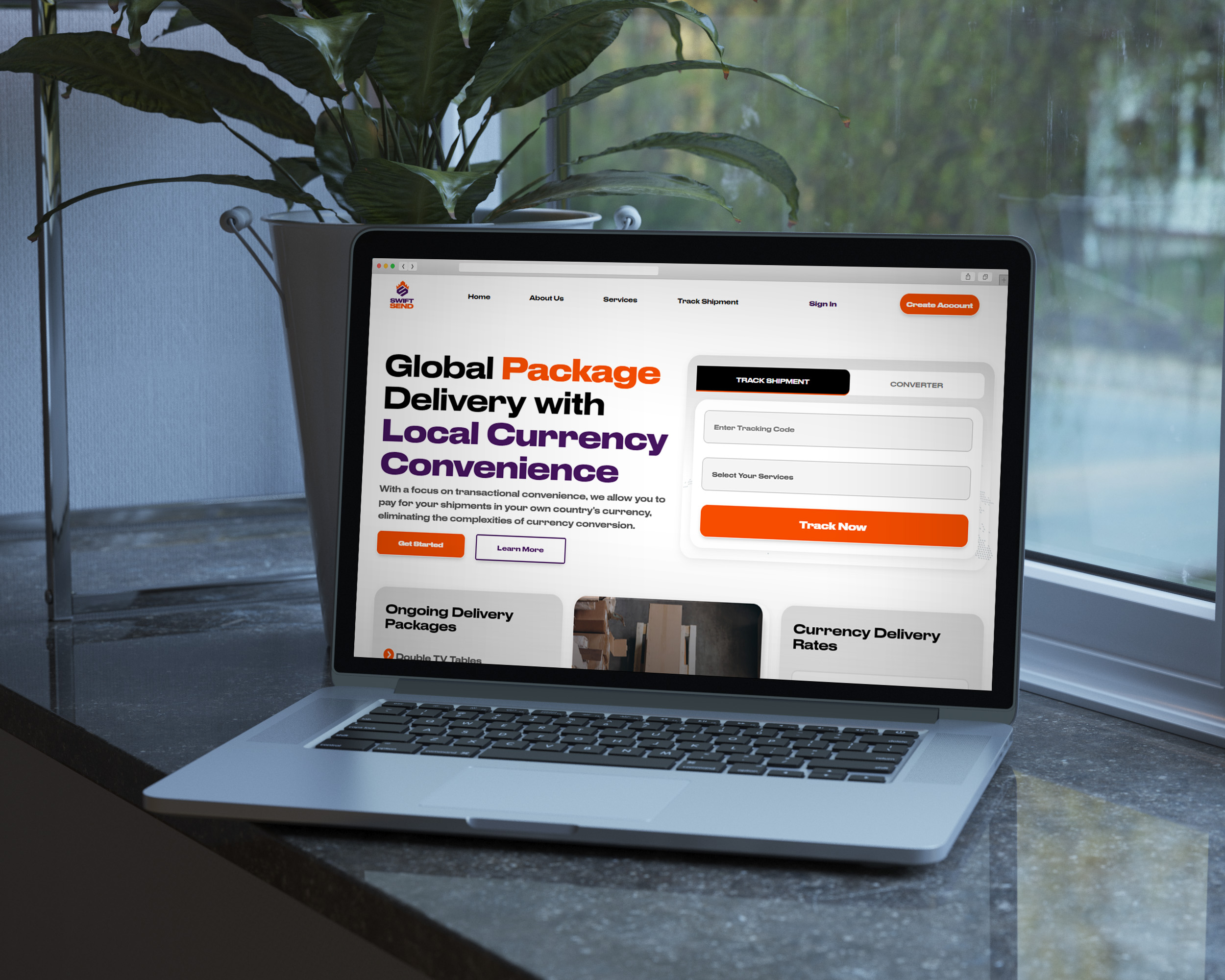
SwiftSend — Logistics Company Website

Marketing & service website for a logistics company. Designed and built a responsive landing page focused on service clarity, trust, and global delivery messaging.

View Project
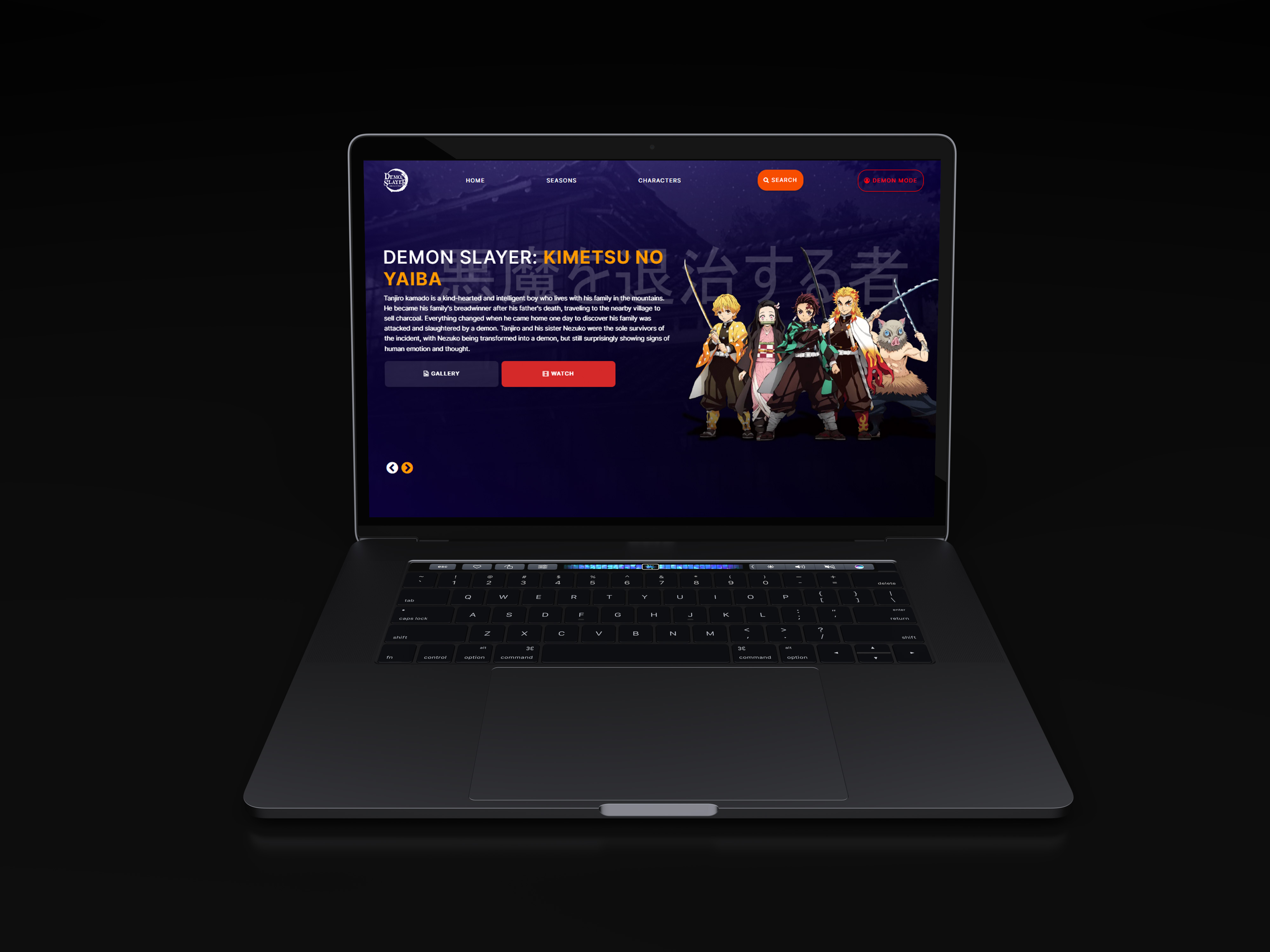
Demon Slayer — Anime Entertainment Website

Entertainment-focused fan experience. Designed a visually immersive landing experience for anime content with strong branding and interaction.

View Project
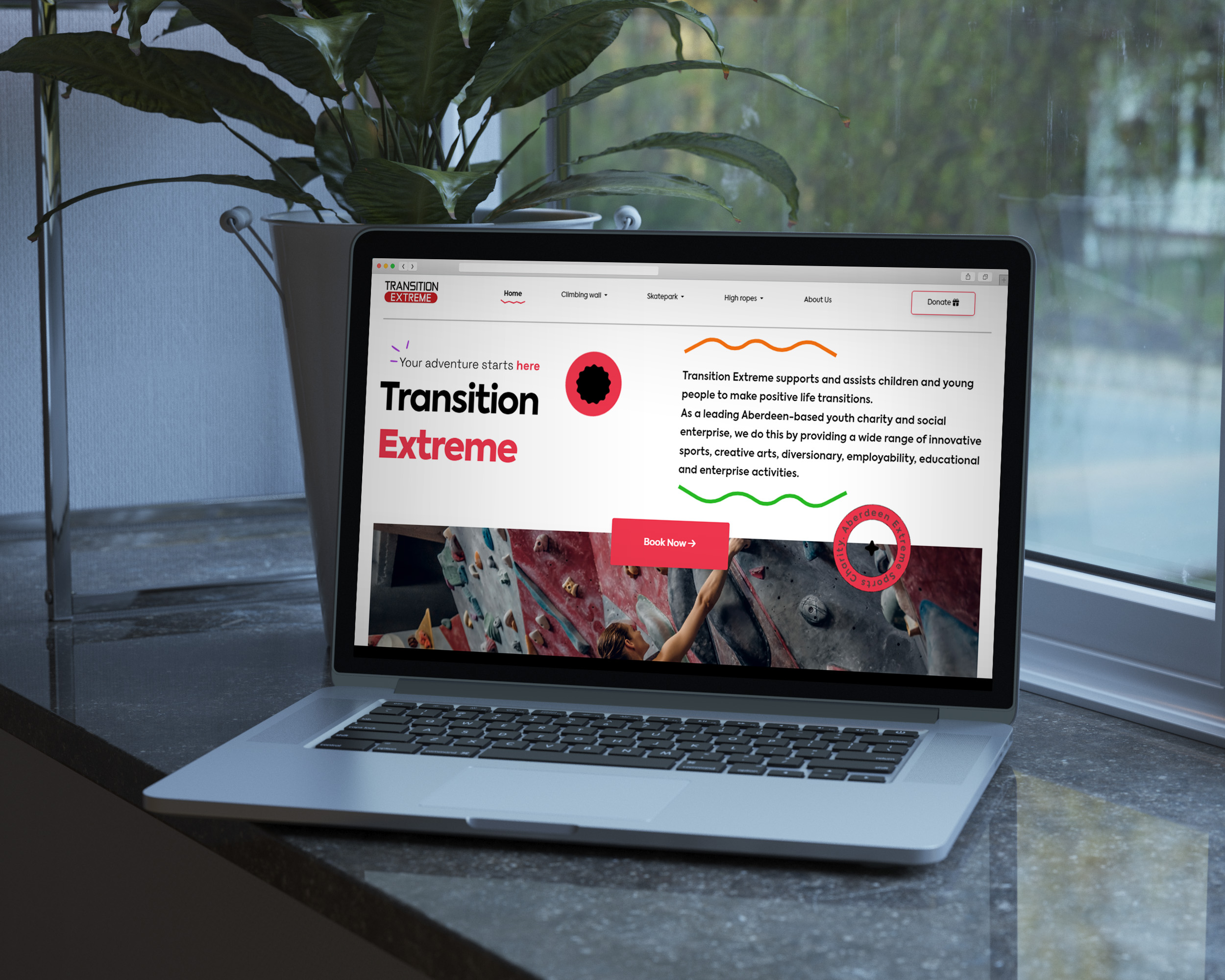
Transition Extreme — Youth Charity Organisation

Non-profit website for a youth-focused charity. Designed and built a clean, accessible website balancing storytelling with clear calls to action.

View Project

Community & Knowledge Sharing

I actively share knowledge and contribute to the design and development community — helping beginners understand design-to-code workflows, practical UX thinking, and modern web development fundamentals.

Figma Community

Creator of open product design resources with 15,000+ duplicates, focused on real-world UI patterns, design systems, and product thinking. These resources help designers and developers build with clarity and structure.

Visit Figma Profile →

YouTube

I produce educational content teaching beginners how to design and build web interfaces — bridging UI/UX and frontend development through clear, practical tutorials and real-world examples.

Visit YouTube Channel →

Teaching sharpens my understanding of product development. I believe strong products are built by people who understand both users and implementation.

LET'S WORK TOGETHER